

The key points:
• An analysis by CORRECTIV.Europe shows that drought has affected the entire European Economic Area, as well as the United Kingdom, North Macedonia, Albania and Serbia. In two-thirds of all regions, the years between 2012 and 2026 were exceptionally dry.
• Throughout Europe, drought is threatening agriculture and food security.
• To mitigate global warming, the EU is aiming to reduce climate-related emissions in the long term. Yet the measures are being steadily relaxed.
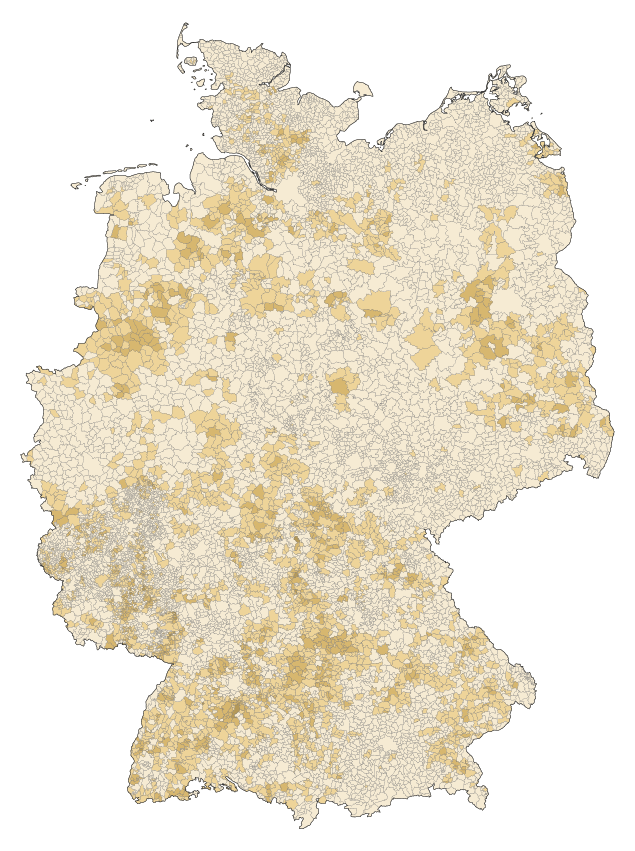
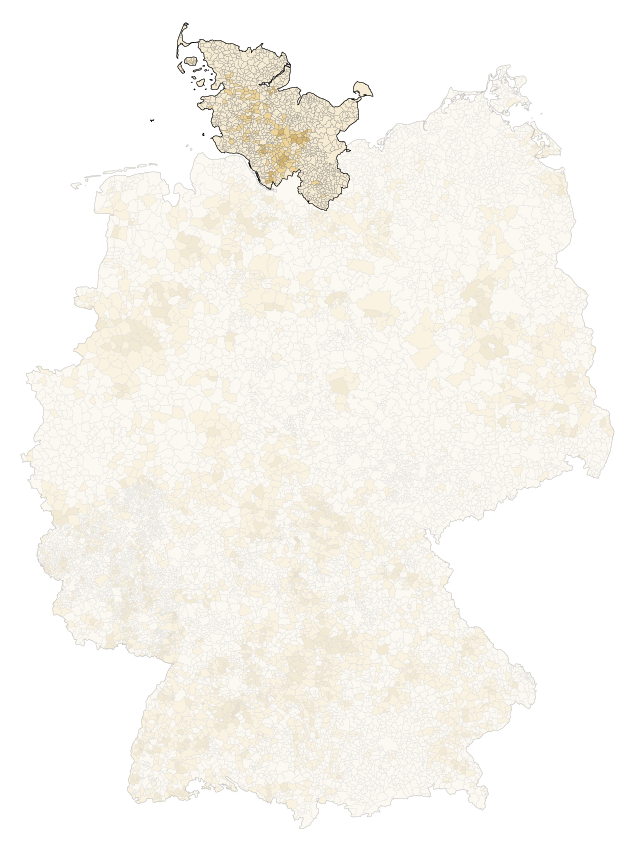
In CORRECTIV.Europe’s data analysis of moderate drought warnings, Germany ranks only 21st across Europe. In terms of acute drought alarms, however, it ranks 16th.
Meteorologists in Germany also warn that not only spring months but also winters are becoming drier on average — a trend likely to intensify in coming years and lead to more droughts.
Droughts are not only damaging to nature; they also impact the economy, especially the agricultural sector. This sector consumes vast amounts of water, which becomes increasingly precious as conditions become drier.
Among the German federal states, Schleswig-Holstein has been comparatively less affected by drought in recent years. Nevertheless, the consequences there are severe.
Family-run farming business Rieckens Landmilch has experienced the dire effects of drought first-hand. “Drought nearly ruined us,” says farmer Felix Riecken.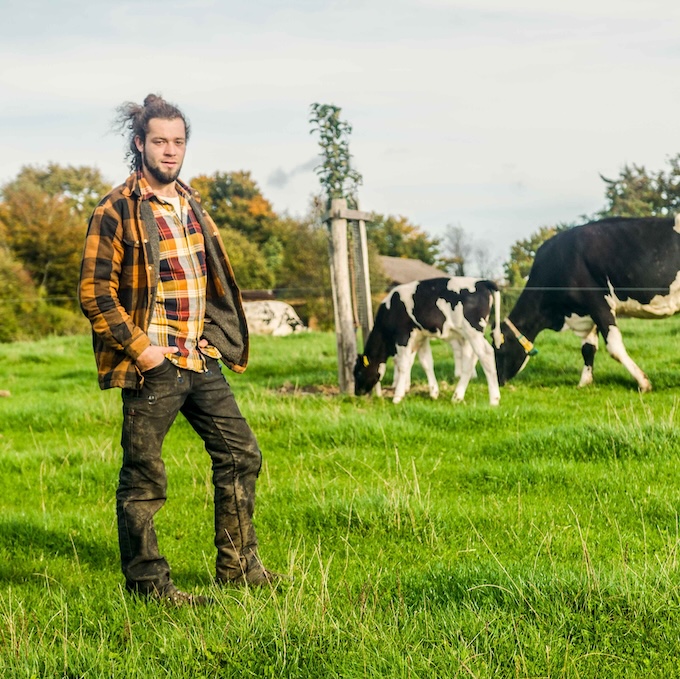 Farmer Felix Riecken in one of the pastures on the family farm. / Photo: private
One dairy cow died from heatstroke. Twelve more had to be slaughtered prematurely. That was in 2018 – one of the most severe drought years on record in Germany. The family business continues to deal with the consequences to this day.
“From April to October, the usual rainfall simply never came”, Felix Riecken recalls. At the time, he was still studying ecological agricultural sciences. When he returned to work on the family farm during the late-summer university break, he barely recognised the land – or his parents.
“Everything we had always known as lush green year after year had dried out; the pastures had all turned brown,” Riecken says. Consequently, silage feed for the livestock had to be accessed three months earlier than usual. A significant proportion of the milk yield was lost.
The Rieckens farm was not the only one struggling. The entire region was affected. “The feed we had to buy not only became extremely expensive, but also conventional,” he says. As a certified organic farm, the family had to apply for a special exemption.
“There is no comprehensive Plan B for when the water disappears.”
“It’s true that in Schleswig-Holstein, we feel the effects of drought less than in other regions of Germany,” says Felix Riecken. But therein lies a major risk: “There is no comprehensive Plan B for when the water disappears.”
Drought occurs when soil lacks moisture over a period of several weeks. The upper layer dries out, whereby plant roots can no longer access enough water. If this persists, drought becomes a real problem – affecting not only agriculture and crop yields but also water supplies for both nature and people.
Drought and water stress
Drought is primarily caused by prolonged lack of rainfall and high temperatures, including heatwaves. But other environmental factors also play a role.
Drought is not restricted to summer; it can occur all year round. Mild winters with little snow exacerbate the situation due to a lack of meltwater. Yet prolonged frost can also be damaging, since frozen soil is barely able to absorb any water. All this is intensified by climate change: drought periods are becoming longer and more frequent.
Drought and water stress are often conflated:
Drought is caused by long, dry periods in which soil, rivers and plants become parched. Its effects are especially devastating in areas with sandy soil, which stores less water than clay-rich soil.
Water stress refers to the consumption of more water than is sustainably available. Drought can intensify water stress, but water stress can also occur without acute dryness, for example through high consumption in cities or industry.
Both have far-reaching consequences: harvests can be devastated, and food can become more expensive. Forests become more vulnerable to pests and fires. Rivers carry less water. This puts pressure on drinking water supplies, shipping, industry and power plants that depend on cooling water. Heat stress in cities also increases. The elderly and the ill suffer particularly acutely during prolonged dry periods. Drought therefore impacts environment, economy and society.
Experts warn that the situation across Europe will continue to worsen: Heatwaves are becoming more frequent and more intense, already leading to widespread droughts in Southern Europe. Glaciers across all regions of Europe continue to melt, states a 2024 climate report by Copernicus.
The report also warns that food production – and therefore food security – must be better safeguarded. Policymakers, it says, are still failing to respond adequately to climate risks, and necessary measures are not being implemented.
Knowledge for action exists – implementation failing
The European Union’s (EU) Green Deal, introduced in 2019, was meant to mark a turning point. EU regulations were intended to improve long-term sustainability not only in agriculture but also in other sectors, and significantly reduce emissions.
Over time, however, many measures have been relaxed. Following farmers’ protests in 2024 in particular, and through Omnibus procedures, political pressure grew to loosen stricter regulations rather than adapt their implementation – especially under the influence of right-wing voices.
Omnibus procedures
An Omnibus procedure is an EU legislative process in which several existing regulations are amended simultaneously in a single package.
One example is the Omnibus III package, which forms part of the reforms to Europe’s Common Agricultural Policy. It deals with environmental requirements and climate adaptation in agriculture, focusing primarily on droughts, heatwaves and water shortages.
The EU approach relies on easing environmental standards and increasing flexibility in implementation. Environmental groups are critical of this approach. In their view, less strict and partly impractical regulations risk weakening environmental and climate standards in agriculture instead of strengthening climate adaptation and long-term competitiveness.
Main text: Meanwhile, human-driven climate change continues to advance and is already reshaping entire regions of Europe. The agricultural sector is being hit especially hard. It is one of Europe’s largest consumers of water: with almost 60 per cent of the requirement used for crop cultivation and livestock farming. As drought intensifies, so does the pressure on this sector – which provides food and jobs for millions of people.passung und langfristige Wettbewerbsfähigkeit zu stärken.
Estimated economic damage of around €126 billion in Europe by 2029
In 2025 alone, extreme weather events in Europe caused financial losses of at least €43 billion. Damage was caused not only by droughts but also other extreme events linked to dryness, such as heatwaves and flooding after heavy rainfall. The exact proportion attributable exclusively to drought cannot be determined, since several extreme weather and climate events often occur simultaneously. The European Environment Agency warns that the economic consequences could surge to around €126 billion by 2029 if the trend is not halted. Yet there are ways to mitigate the impact.
Key measures focus on climate adaptation and preparedness. These include climate-resilient urban and infrastructure planning, reducing soil sealing and improving natural water retention in landscapes. Adaptation measures also play a central role in agriculture.
Drought persists, demands comprehensive action
European agriculture is highly diverse. The same crops can react differently to drought depending on region and soil conditions. It is therefore impossible to categorically determine when a drought period becomes critical. One thing is clear though: the larger the affected area, the more strongly the entire agricultural system is impacted – as seen in Germany in 2018, when the effects of drought also hit the wider economy and consumers.
Timing and location also matter greatly. Drought in spring, for example, affects the sensitive growth phase of plants and can significantly impact harvests, even if the dryness is otherwise barely noticeable.
More efficient irrigation, drought- and heat-resistant crop varieties and diversified crop rotation can help reduce harvest losses. Soil protection measures – such as reduced tillage, cover crops and a build-up of humus – also help soil retain water more effectively. One example is wheat cultivation in Southern Europe, where increasingly water-efficient varieties are being used.
In addition, early warning systems for extreme weather, stronger flood protection, and financial security through subsidies and insurance can help cushion economic damage and enable quicker response to crises.
The effectiveness of such adaptation strategies depends heavily on regional conditions.
“Unlike hail or heavy rainfall, drought does not occur suddenly and in isolated areas. It often develops over long periods and affects large parts of agriculture simultaneously,” explains Robert Finger, Professor of Agricultural Economics and Policy at Eidgenössischen Technischen Hochschule Zürich.
This also affects the economic viability of farms, adds Tobias Dalhaus, agricultural economist at Rhine-Waal University of Applied Sciences: “A diversified farm can absorb heavy losses in individual crops, whereas specialised farms often suffer significantly greater damage.”
Drought pressures profitability and food security
Yields are important, but so is the revenue they generate. “Regional surpluses can drive prices sharply down, while for globally traded crops such as wheat or maize, prices are mainly influenced by dominant production regions and their buyers,” says Dalhaus.
Wheat in particular plays a key role in Europe. It is a staple not only in food products such as pasta and baked goods but also in animal feed. The EU is one of the world’s largest wheat exporters. Countries such as France, Germany and Poland supply large quantities to other states. Production secures jobs in farming, processing and trade. A poor harvest year can therefore have far-reaching consequences. Wheat is of major importance both economically and for food security.
That a poor harvest year is far from unlikely is shown in an analysis by the Joint Research Centre (JRC). It examines how severely drought could affect agricultural yields depending on location and climate scenario. In the case of wheat production in Greece, for example, JRC experts calculate that an extreme drought could lead to yield losses of up to 50 per cent.
Climate projections are unequivocal: droughts and the consequences thereof will worsen dramatically – even if warming can be limited to 1.5 degrees Celsius. “Without adaptation measures, future yield losses for wheat, barley and maize in some regions of Europe could be two to three times higher than under current conditions, depending on the level of warming assumed,” says Lauro Rossi, programme director at research institution Fondazione CIMA and one of the authors of the Copernicus drought data.
“There is no silver bullet against such extremes or against climate change,” Rossi says. As every region in Europe faces different conditions, measures must be adapted locally and different approaches combined in the long term.
Measures and insurance poorly coordinated
Only a combination of adaptation, diversification and suitable insurance schemes can truly reduce the risks, says agricultural economist Finger. However, “Insurance against drought is possible, but often expensive and complex, partly because many farms in a region are usually affected at the same time.”
Agricultural economist Tobias Dalhaus also sees flaws in the current system: “Ideally, insurance should only come into play once farms have already exhausted every possible protective measure.”
Things are often different in practice, however. Drought insurance can reward good risk management, for example through adjusted premiums. Yet when harvests fail because of extreme weather, farms often receive state compensation. According to Dalhaus, this means many farms have little incentive to take precautions of their own. There is another issue as well: risk management still plays barely any role in agricultural training.
“When the necessary tools are missing, more resilient measures are implemented more slowly, even though they are crucial for food security and economic stability in the sector,” Dalhaus concludes. Ultimately, farms are largely left to fend for themselves.
The Rieckens are not an isolated case. In several European countries, prolonged dryness has already been causing significant crop failures and economic losses for years.
The Rieckens’ organic farm in Schleswig-Holstein was insured as well. According to the family, however, “There’s no real insurance against the sheer scale of the consequences of climate extremes – especially drought.” In the end, the farm was only saved by the somewhat milder years in the region after 2018. This allowed the business to implement measures independently – though these remain extremely costly.
Agroforestry as climate prevention
Felix Riecken noticed that nature recovered first along the hedge banks – strips of trees and shrubs lining fields and heathland. These not only provide a habitat for many species but also offer the surrounding land some protection against extreme weather. Hedge banks slow and soften the effects of weather extremes such as drought or heavy rainfall, while also storing moisture like a sponge.
This encouraged the Rieckens to convert the entire farm to agroforestry. In doing so, they sought advice from the German Agroforestry Association and other experts from science and practice.
Agroforestry is a land-use system combining trees and shrubs with crops or livestock on the same land. Felix Riecken describes it as “building up ecosystem capital geared towards long-term climate resilience”. But results only become visible after years and depend on wider climate developments.
The Rieckens meanwhile operate five agroforestry systems on their land. “It has cost an enormous amount of work and financial resources,” says Riecken. “For us, it means the business is constantly at its limit.” He says this is only possible because the family sticks together – and because over many years they have established strong sales channels and a loyal customer base. In fact, their customers not only visit the farm shop regularly but even come to help plant new hedge banks.
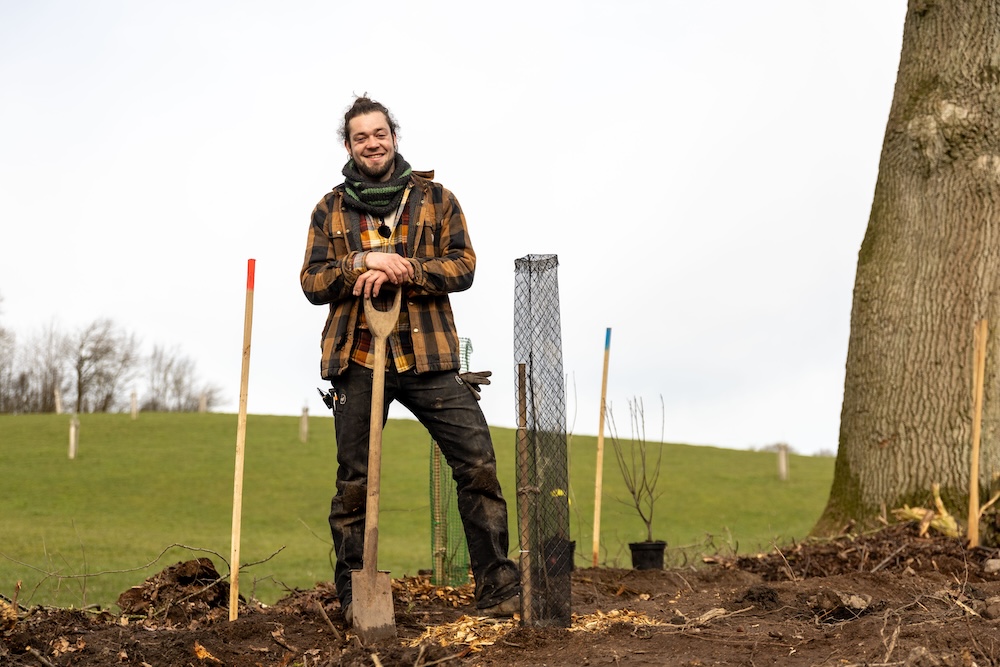
The Rieckens meanwhile operate five agroforestry systems on their land. “It has cost an enormous amount of work and financial resources,” says Riecken. “For us, it means the business is constantly at its limit.” He says this is only possible because the family sticks together – and because over many years they have established strong sales channels and a loyal customer base. In fact, their customers not only visit the farm shop regularly but even come to help plant new hedge banks.
The damage we suffered as a business and as a family cannot be compensated under the current system.
Overall, Felix Riecken estimates the financial losses from 2018 at up to €150,000. The farm received around €17,000 in disaster relief payments. That, he says, bears no relation either to the financial losses or to the extra hours of labour required – let alone to the consequences that cannot be measured in money.
EU agricultural subsidies have also provided little tangible help for the Rieckens, even though they now receive support for their agroforestry systems. Farms currently receive €600 per hectare of woodland area. “That means that, out of our 20 hectares of agroforestry systems, we only receive support for just over half a hectare,” explains Felix Riecken. “That only amounts to slightly over €300 a year for the entire woody vegetation, despite the investment of €130,000.”
“We in the agricultural sector certainly bear some responsibility,” says Riecken. “With the right management, we can deliver major and far-reaching sustainability benefits.” But for this to become a sector-wide reality, farms would require financial resources they cannot generate on their own. “And, ultimately, also recognition of the value of this work — not just in politics but also in society and beyond purely economic terms.”
Felix Riecken concludes with this: “Regenerative agriculture has allowed our land to largely recover, but our herd has still not returned to the level it was at before the 2018 drought.” He stresses the lasting damage done to the ecosystem. The family may now have a plan for the future, but they still have not achieved satisfactory economic stability. The mental strain and existential fear also persist. “The damage we suffered as a business and as a family cannot be compensated under the current system.”
Methodology
This atlas depicts the number of drought days between 2012 and 2026 across the European Economic Area, the United Kingdom, North Macedonia, Albania and Serbia.
CORRECTIV.Europe calculated annual averages as well as the years during which conditions were driest. The analysis is based on data from Copernicus, which records local drought conditions every ten days at a spatial resolution of around five square kilometres.
Unusually low rainfall and soil moisture levels constitute a warning state. The atlas labels this as “Warning: Moderate Drought”. If satellite imagery also shows that plants are suffering drought stress, the situation is classified as an alarm state. The atlas labels this as “Alarm: Acute Drought”.
Limitation: Both indicators are based on deviations from long-term averages. As such, regions that have been dry for decades do not necessarily stand out more strongly in the data. (Full methodology of the Copernicus raw data.)
Text and research: Lilith Grull, Frida Thurm
Data work: Johannes Gille, Ada Homolova
Editing: Till Eckert, Marius Münstermann
Fact-checking: Marius Münstermann, Rose Mintzer-Sweeney
Design: Mostafa Negm, Maximilian Bornmann