
For decades, Germany argued over the acquisition of every rifle and every grenade. Each military purchase became a political battleground, every armaments project a source of controversy. Then came a dramatic change of direction.
Amid fears that Russia could attack countries within NATO territory by 2029, Germany now plans to build a fundamentally new kind of army – fully functional, ready for action and capable of fighting a war.
Just how far the government is prepared to go is revealed in secret documents from the Ministry of Defence seen by CORRECTIV. They read like a blueprint for Germany’s transformation into a military power. Spanning hundreds of pages, the papers set out how the Bundeswehr (Germany’s armed forces) is to be reshaped in the years ahead.

Bitte nehmen Sie sich einen Moment Zeit.
Nachrichten und Recherchen sind unerlässlich, damit Sie sich eine Meinung bilden können. Aber die derzeitigen Bedrohungen der freien Presse und der Medienlandschaft sind alarmierend.
Wir fordern die Bundesregierung auf, Pressefreiheit und die Medienvielfalt in Deutschland umfangreich zu schützen. Machen Sie mit.
The plans include an extensive weapons procurement list. Around €400 billion is to be channelled in the coming years into ammunition and new weapons systems – including some whose use had long been categorically ruled out, either because they operate autonomously or because they could trigger nuclear escalation. Experts are therefore urging the government to exercise restraint.
The Ministry of Defence declined CORRECTIV’s request for comment on specific items on the list “for reasons of military security”. A spokesperson did, however, add: “The procurement of weapons for the Bundeswehr is derived from the operational requirements of the armed forces,” adding “the procurement process is subject to strict rules and close political control”.
But how was this list of weapons drawn up exactly? That detail remains opaque, according to some experts and members of parliament.
Do you have any information on this topic that you would like to share? Contact our reporter via Signal (tilleckert.90).
The list also makes clear that in many cases the government already knows how – and to which companies – it intends to award defence contracts. In more than 40 instances, this is set to happen without any competitive tendering process through which firms could bid for the contract. The contracts involved are worth more than €64 billion.
The documents further show how, following the introduction of the new form of conscription, the training of soldiers is to be overhauled. One focus is the reorganisation of so-called Heimatschutz, or home guard: troops who, in the event of war, would be tasked with protecting critical infrastructure inside Germany.
These government papers point to a profound transformation that, in the years ahead, will reach into all areas of German life. Our investigation shows that the country will face immense social and ethical challenges in the foreseeable future.
Chapter 1: Germany needs kamikaze drones
“Loitering Munition” appears twice in the Ministry of Defence’s secret weapons list from August. The term sounds rather innocuous. Yet observers have long settled on another name for this particular weapon: kamikaze drones.
On the evening of 13th October, a journalist named Ibrahim Naber experienced firsthand how kamikaze drones had earned their name. He was travelling in Dnipro, an area close to the border with the Donbass region in Ukraine. Although the front line was far away, the war was reaching deep into Ukraine’s hinterland. Naber was accompanying a mobile firing unit of the Ukrainian armed forces, tasked with intercepting Russian drones.
At first, everything seemed to be going according to plan. Naber and his two colleagues filmed soldiers firing bursts from their machine guns. They then interviewed the men near their military truck. Suddenly, in the darkness, they heard a sound that neither the journalists nor the soldiers could identify. It sounded as though a car was hurtling straight towards them. A few seconds later, a drone struck the Ukrainian military truck and exploded. Naber was thrown through the air and landed several metres away.
He gathered himself and dragged himself to a nearby patch of woodland. There, he applied a so-called tourniquet to a colleague who had been wounded in the leg by shrapnel from the drone, in order to stop the bleeding. Later, the journalists were evacuated.
Konstantin, one of the Ukrainian soldiers in the unit, lost his life in the attack.
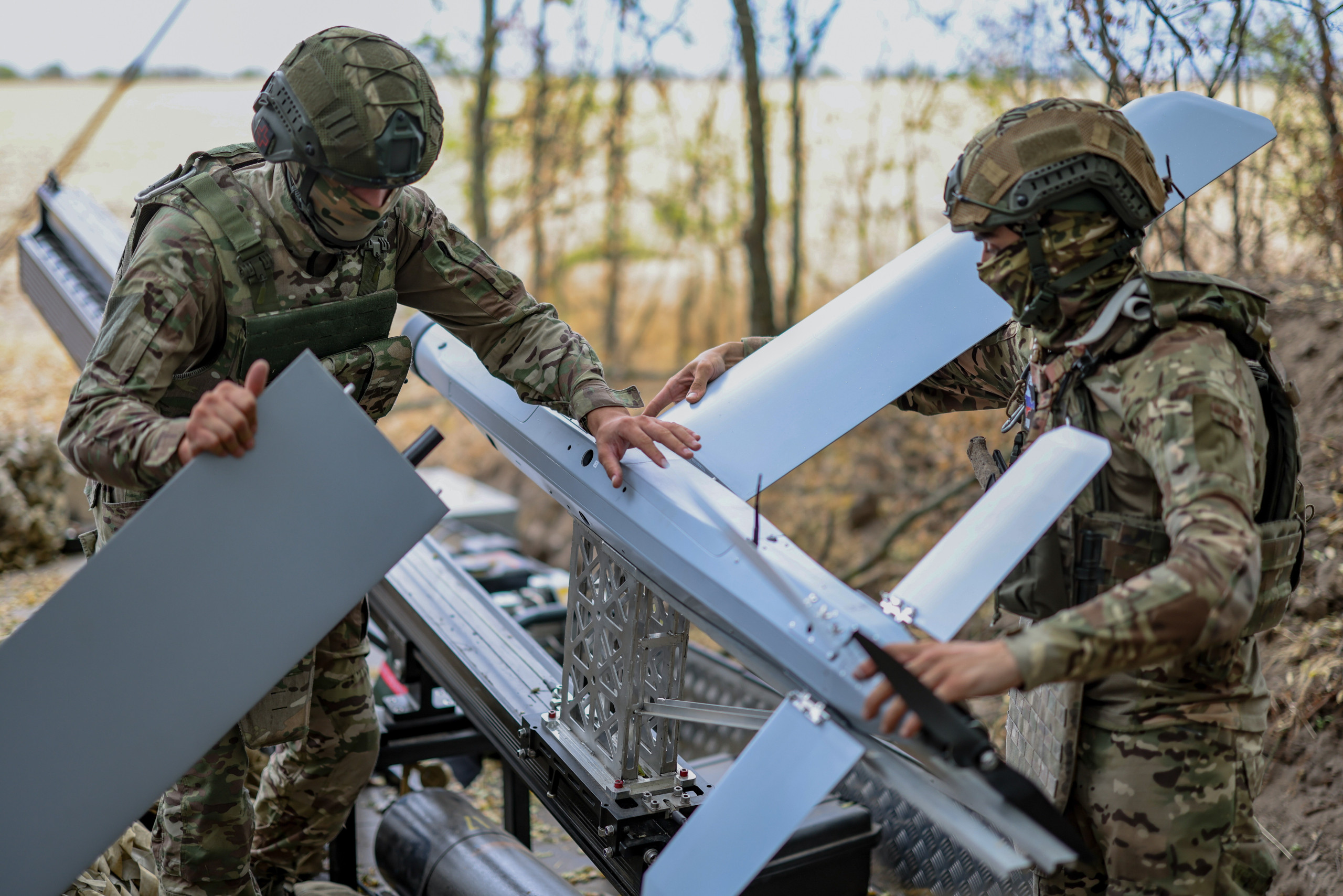
Hundreds of these kamikaze drones are in operation in Ukraine every day. They are also in use in Sudan, where they are deployed by Huthis to attack American ships. After being launched, they are guided using cameras installed on board. Some are large, some are small, some have rotors, some have fixed wings; sometimes they appear in swarms, sometimes alone. They circle their targets until, eventually, they plummet, and destroy themselves upon impact.
The drones are sometimes called single-use drones, or, more cynically, suicide drones. For months, they have been changing the rules of the battlefield. “The constant buzzing follows the soldiers everywhere they go,” says Naber. And the psychological effect is drastic – you don’t feel safe anywhere.
In 2022, the German government categorically ruled out the use of such weapons. But times have changed. The internal weapons procurement list obtained by CORRECTIV shows that the Ministry of Defence now intends to acquire these very warheads. The new 45th Panzer Brigade of the Bundeswehr in Lithuania, for example, is set to be equipped with them.
Six hundred mini-kamikaze drones from a manufacturer not yet publicly identified are to be ordered, at a cost of around €700,000. In addition, €700 million is reportedly earmarked for the Israeli arms company Elbit Systems for the “SkyStriker” drones. Tests are currently underway with weapons systems from two German defence start-ups as well as the defence giant Rheinmetall. Each company hopes to secure a contract worth €300 million.
Many experts agree that kamikaze drones make the course of war more unpredictable for all sides. At the International Committee of the Red Cross (ICRC) in Geneva, Richard Lennane and his colleagues are therefore urging EU states to push for regulation.
“Our concern with kamikaze drones is that they are meant to be cheap to produce – that is the whole idea behind them,” says Lennane. “The cameras used are often simple analogue video cameras with poor image quality.” As a result, it is extremely difficult to determine what constitutes a legitimate target and what does not.
“There is also the question of what happens if something goes wrong or no target can be found. What do you do then? Do you simply let the drone crash in a field – or do you look for another target, one you are not entirely sure is lawful?”
(Photo: picture alliance / ZUMAPRESS.com | Alexei Konovalov)
And then there’s the elephant in the room: artificial intelligence. Manufacturers are increasingly integrating AI into their drones, for both target detection and identification. The idea behind it is simple: greater autonomy should lead to higher hit rates and fewer losses.
Max Mutschler from the Bonn International Centre for Conflict Studies (BICC) however is concerned about current developments surrounding kamikaze drones. “The danger is that people might rely on AI, even when selecting targets,” says the arms expert. “These systems are prone to errors.”
For a long time, an unwritten rule governed weapons and armed forces worldwide: it was a human being who had to make the final decision to kill. However, AI-driven kamikaze drones are now threatening to tear down that boundary. Observers and human rights organisations have long been warning of a loss of control.
A spokeswoman for the Ministry of Defence who wrote to CORRECTIV regarding the use of AI systems in the Bundeswehr claimed that “the decision on the area of deployment, target selection and use of weapons” always remains “the responsibility of a human being” and is “not made by the system itself”. The Geneva Conventions, and thus international humanitarian law, are complied with at all times, she stated.
Yet experts such as Lennane have been asking how this decision-making process can be reconstructed, since the weapon is self-destructing. How can we truly know whether a human or an AI ordered an attack? And under international humanitarian law, who is responsible and held to account if civilian casualties and damage occur?
Even though Mutschler considers the system itself to be problematic, he says: “The genie is out of the bottle.” Regulation would come too late. Procuring kamikaze drones for the Bundeswehr makes sense in order to be prepared for the future. Naber, the journalist who was injured by the Russian drone, also sees no other alternative.
Kamikaze drones are not the only item on the Ministry of Defence’s wish list that is alarming experts. It also includes a weapon that defence expert Mutschler regards as extremely dangerous: the hypersonic missile.
With it, the Bundeswehr would be entering new territory. Its purchase would rank among the largest and most expensive military projects in German history.
Chapter 2: The mysterious weapons wish list
In recent years, the hypersonic missile has become a geopolitical status symbol: if you have it, it means you’re big, rich and powerful.
Russia boasts of being a pioneer in developing the weapon and, according to its own statements, is already using them in Ukraine. China regularly showcases its versions at military parades. The United States is also developing hypersonic missiles. Germany now apparently wants to follow suit.
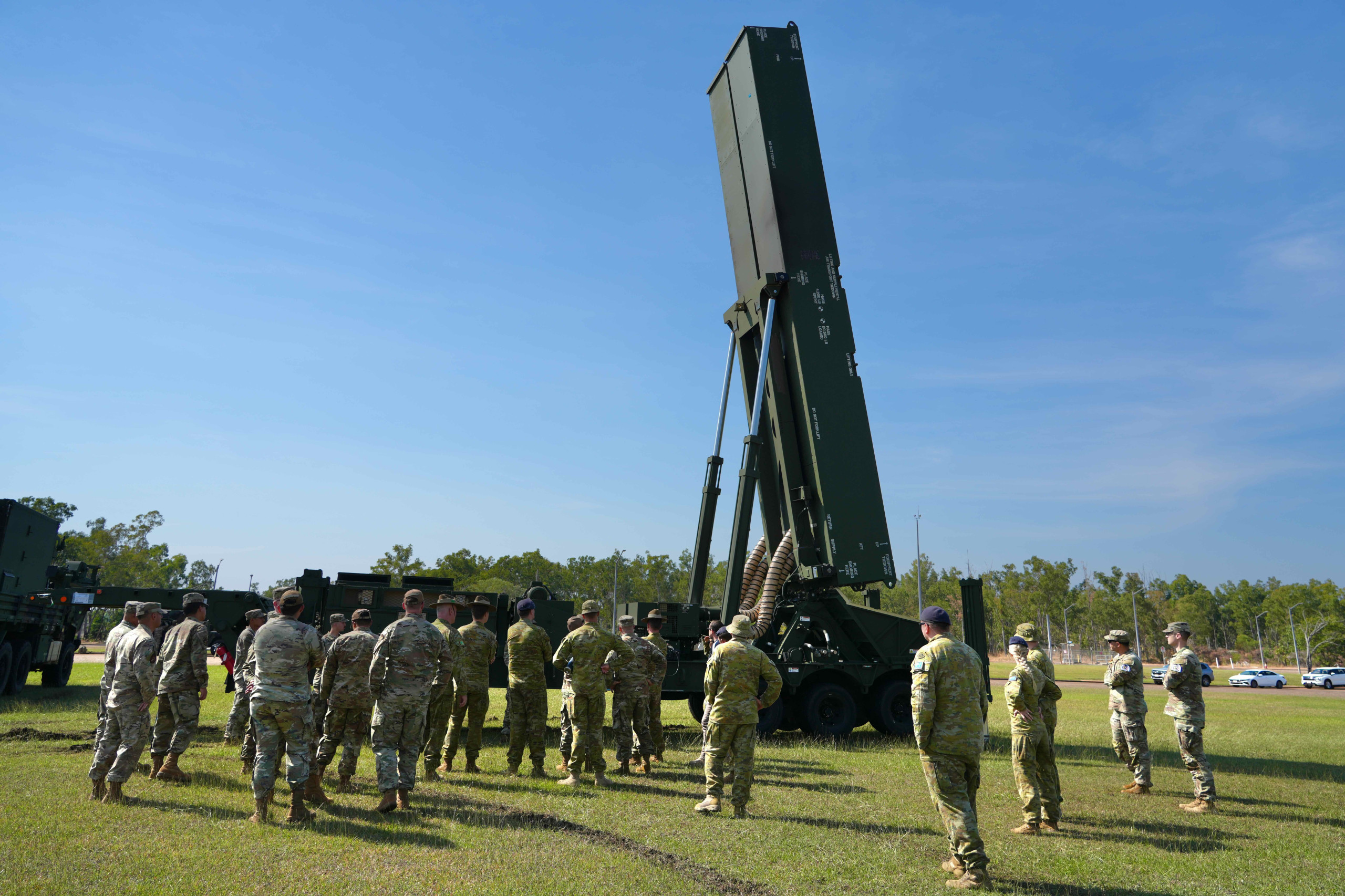
“Procurement of cruise missiles and missiles for hypersonic glide vehicles for Ground Deep Precision Strike 2,000 km+” – that is how the weapon is described on the Ministry of Defence’s weapons procurement list. According to this document, 500 of these long-range weapons are to be obtained, at a cost of around six billion euros, with the supplier unknown. In addition, a home-grown German version of the weapon is to be developed.
Hypersonic missiles travel at extremely high speeds, at least in theory, making their flight paths and points of impact difficult to predict. They can carry out complex manoeuvres during flight, which poses major challenges for current air defence systems. However, the military value of the missile is contested, with some arguing that its effectiveness has not yet been proven.
(Photo: picture alliance / Cover Images | U.S. Army/Cover Images)
Alongside the hypersonic missile and kamikaze drones, the Ministry of Defence’s list includes procurement plans for ammunition, radar systems for satellites and weapons such as successors to the G36 rifle and Heckler & Koch’s P8 service pistol. Not to mention a vast amount of surveillance technology.
Altogether, around €400 billion is earmarked for the more than 300 items over the coming years — a sum that makes the once much-debated off-budget fund for the Bundeswehr look almost trivial.
Alongside the details of the specific weapons, the document also names some of the preferred suppliers and indicates whether a formal tendering process, in which other firms have the chance to bid for the work, is planned. Defence Minister Boris Pistorius wants to clear the way to hand out direct contracts in order to speed up military spending. The revised legislation is due to enter into force at the beginning of 2026.
This would dispense with the normally lengthy procurement procedures in which companies compete for contracts. The list contains ten such direct contracts. A further 39 orders are to be placed “without a competitive selection process”, with a preselected group of companies.
One thing we do know is where this list was drawn up: in the Bendlerblock, a historically significant complex of buildings in Berlin that now houses the Ministry of Defence. What remains unclear is how the list came into being.
Sara Nanni, a Green MP and her party’s spokesperson for the Bundestag’s Defence Committee, was taken aback when saw the list for the first time. She wondered whether it had been drawn up in line with NATO’s requirements and planning. According to information obtained by CORRECTIV, the list was not known to NATO.
As a rule, the individual branches of the Bundeswehr — the army, air force and navy — draw up their own lists of items to be procured. These are then subjected to a preliminary review at the Ministry of Defence. Individual items are subsequently submitted to the Bundestag’s budget committee, which must sign off on any military expenditure exceeding €25 million.
“It is striking that these wish lists keep getting longer, and that it is not always clear why certain items are on them at all,” says Michael Brzoska. The renowned peace and conflict researcher has been dealing for decades with the Bundeswehr’s scandal-ridden military procurement system. He considers the list to be overblown and not in line with actual requirements.
Nanni fears that it may have been drawn up according to a “call-and-response principle”. By this she means that the arms lobby calls the shots and the government responds. “I have no objection to the product categories as such, but I would very much like to see a capability plan that explains what is needed, why, and in what quantities.”
Within the Bendlerblock’s internal hierarchy, permanent secretary Jens Plötner is responsible for armaments and therefore for weapon procurement planning. CORRECTIV submitted an inquiry via the Ministry of Defence about how the procurement list was drawn up, but received no answer. As a result, it remains unclear who took the decisions on the individual items and on whether they should be obtained via direct contracts.
It is also still unknown when the budget committee will vote on the respective items on the list. Recent armament purchases, however, suggest that the items are already being processed one by one. One example is the new satellite radar system “Spock”.
The hypersonic missile is likely to spark considerable debate. German experts are divided over the proposed acquisition of this particular weapon.
Unlike in the case of kamikaze drones, arms expert Max Mutschler believes that hypersonic missiles cross a line, because they could widen a conflict that is initially limited in scope. “If Russia were to attack the Baltic states, such weapons could be used to strike high-value targets deep inside Russian territory — which could in turn prompt retaliation,” he says. Because Russia could equip these missiles with nuclear warheads, the risk of a rapid escalation is, in his eyes, particularly acute.
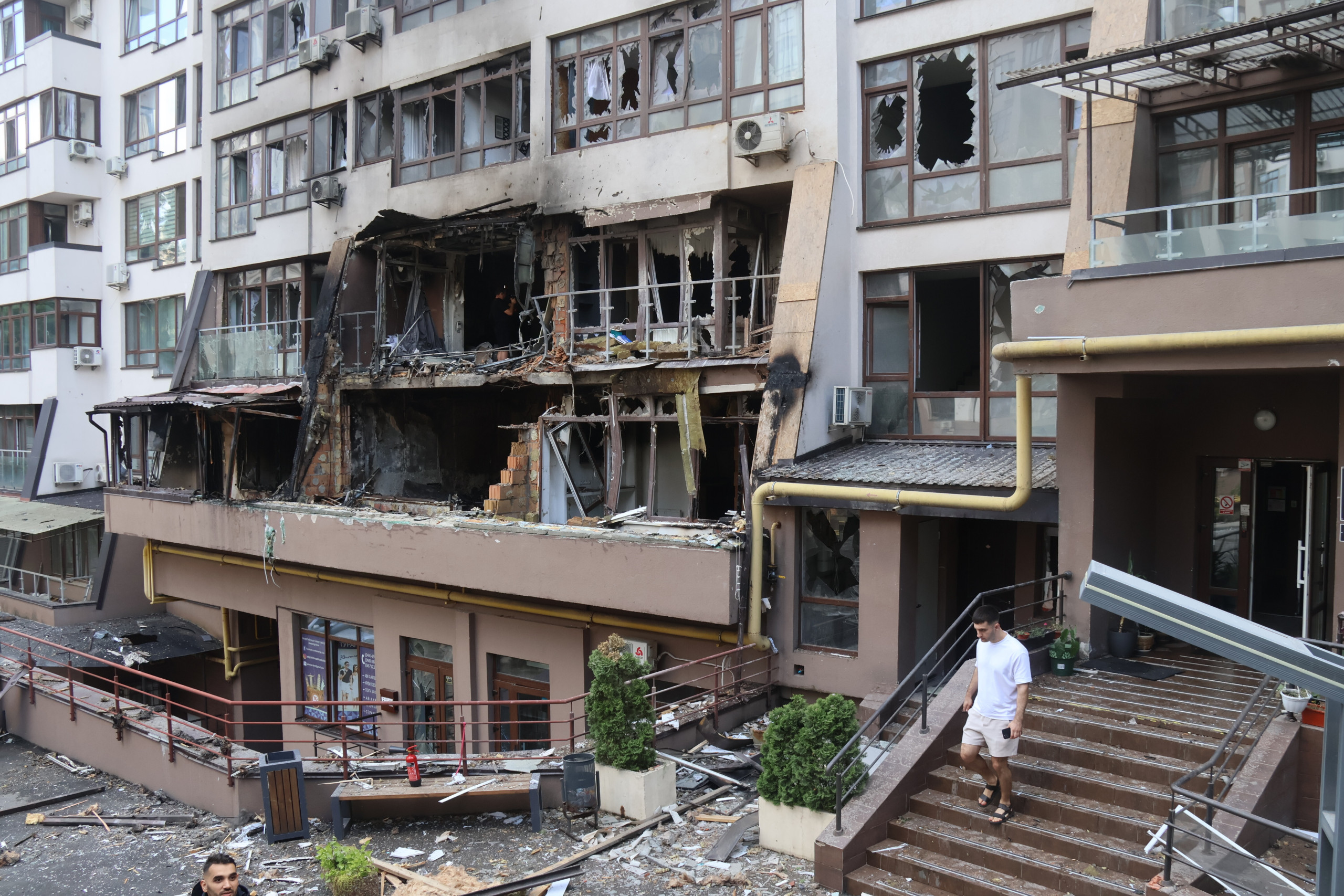
Before acquiring hypersonic missiles, Mutschler argues, it should be examined whether such weapons could be banned for both sides through arms control, or at least limited in number. This would involve what is often a lengthy diplomatic process aimed at reducing the threat to all sides.
That would include, among other things, inviting Russia to the negotiating table. This, in the view of security expert Christian Mölling, director of the research project “EDINA: European Defence in a New Age”, is the crux of the matter: “Russia would probably only show a willingness to negotiate once we have already deployed the missiles ourselves.”
According to Mölling, the so-called INF Treaty between the United States and the Soviet Union in 1988 only came about because both sides at the time possessed nuclear intermediate-range missiles. This was followed by disarmament, and the missiles were dismantled and destroyed.
Mölling considers the procurement of hypersonic missiles to be a logical consequence. “They are the further development of these long-range missiles, and they are now arriving. You can call it an arms race, but we have to deal with the threat from Russia,” he says.
The Ministry of Defence declined to comment on questions regarding the acquisition of the hypersonic missile.
Chapter 3: Germany: a military power?
Alongside the procurement list for ammunition and new weapons, documents from the Ministry of Defence also outline how and where Bundeswehr personnel are to be trained in future.
Greater importance is set to be attached to so-called Heimatschutz, Germany’s home guard, which is to be reorganised and reconstituted with a total of 23 battalions. Soldiers serving in these homeland security units are to protect transport routes and critical infrastructure within Germany. Last month, the capital was given a taste of what may be to come.
It was the middle of the night when the military unit moved down the steps of Berlin’s Jungfernheide underground station in tactical formation. One by one, the soldiers stepped onto the tracks. They then advanced towards a stationary train, rifles at the ready. There, they came to the aid of an injured comrade.
The scene could have been taken from a feature film. In November, Bundeswehr servicemen and women took part in an exercise in a public underground station for the first time in history. For a week, they rehearsed for the worst-case scenario: an attack on Berlin.
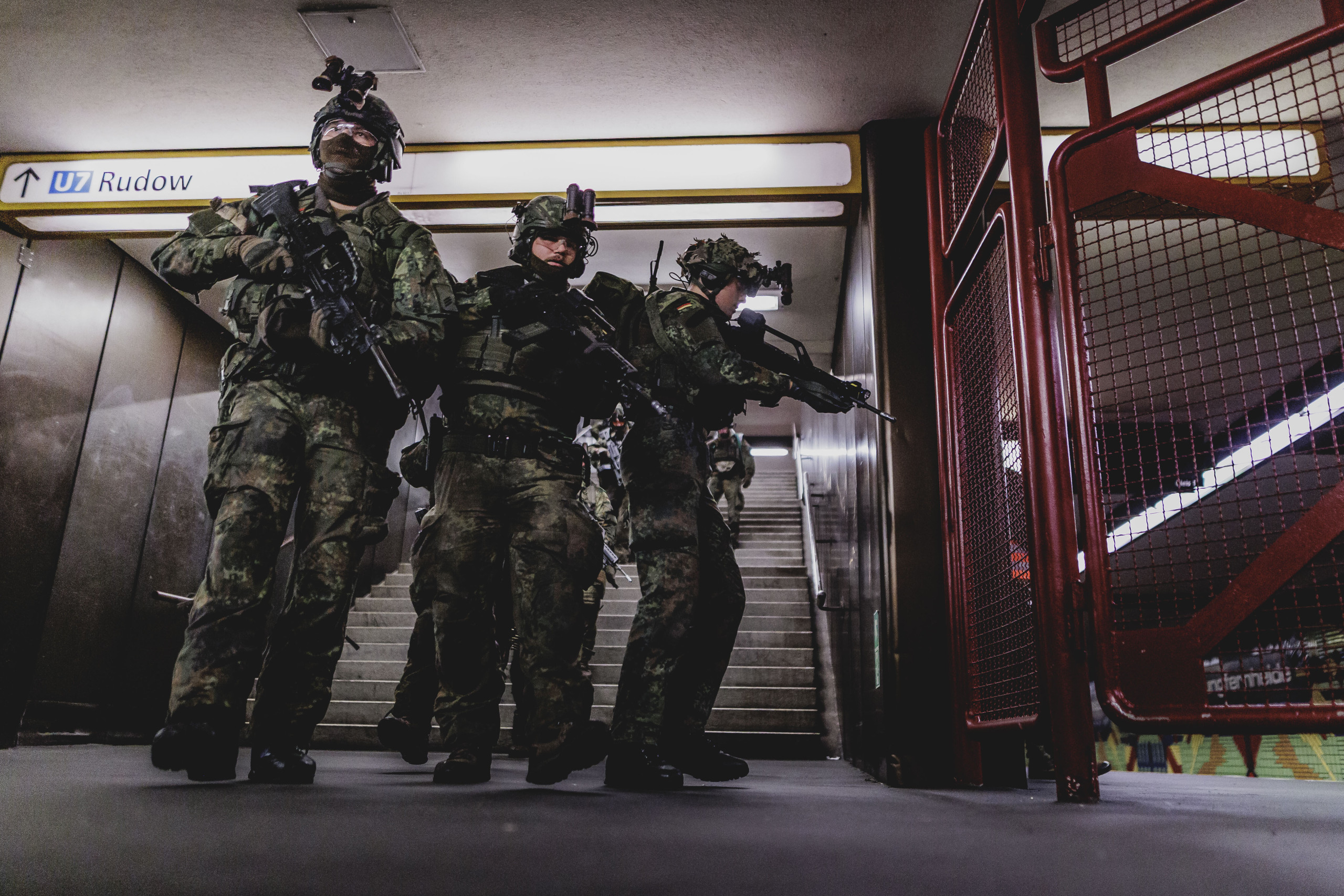
If war were actually to break out within NATO territory, Germany would need a vast number of soldiers: 460,000, according to government papers, would be required for the country’s contribution to collective defence.
For this reason, officials in the Bendlerblock have developed a new model for conscription. For the first time since it was suspended 14 years ago, tens of thousands of new recruits are to undergo military service from next year onwards. A large part of the force, however, would have to be drawn from the reserves.
The plan has already met some resistance. In recent weeks, the first demonstrations against it have occurred in major cities, accompanied by an old slogan in new packaging: “You can’t have our children.”
Germans are increasingly being confronted with the prospect of war — in talk shows and through images such as those from the Berlin underground station exercise. And preparations are also proceeding at full speed behind the scenes: in late summer, mayors and district administrators across the country were visited by senior army representatives, as CORRECTIV revealed.
The purpose of the visits was to discuss what would be required of their municipalities in the event of war — how local fire brigades, relief organisations and the police would need to provide support. These processes are summarised in the so-called Operationsplan Deutschland, a document running to more than a thousand pages. Current tenders on the EU open procedures procurement platform also show that Germany intends to acquire tens of thousands of modular tents and field beds, and new accommodation buildings are being constructed in many barracks.
Meanwhile, ammunition production is running at full throttle. At its new facility in Unterlüß, Lower Saxony, Rheinmetall plans to manufacture up to 350,000 rounds of artillery ammunition per year. The arms company appears multiple times as a supplier on the Ministry of Defence’s procurement list.
Even within Germany’s Mittelstand – the group of stable small and medium sized private businesses that underpin the German economy– there is a gold-rush mentality in response to the federal government’s plans. The German Association of the Defence Industry recently reported being “overwhelmed” by new membership enquiries. The number of companies seeking to convert their production from mechanical engineering or automotive parts to armaments has almost doubled within a year, from 243 to 440.
“That the German arms industry is pushing so hard is politically troubling,” says conflict expert Michael Brzoska. “What will happen to all these newly created capacities once the Bundeswehr’s needs are met? Or if the situation with Russia turns out differently than we expected?” According to Brzoska’s analysis, the only remaining option for these companies would then be arms exports.
Eighty years have passed since the end of the Second World War. The experience of total war, national guilt and the country’s collapse led broad swathes of the population to avoid the topic of war for a long time. Germany focused on reconstruction, economic stability, and a political culture of disarmament and international cooperation.
Yet the shift towards becoming a military power is now in full swing — and it affects us all.
Text: Till Eckert
Research: Martin Böhmer, Till Eckert, Stella Hesch, Alexej Hock
Design: Mohamed Anwar, Rose Mintzer-Sweeney, Hans Spieß, Phillip Waack
Editing: Anette Dowideit, Gesa Steeger
Fact check: Gesa Steeger
Credits Video material: Rheinmetall (Header), Ibrahim Naber / Welt (drone attack)