

This special series draws on CORRECTIV.Exile’s network of journalists and professionals remains under pressure to document how authoritarian leaders are learning from one another and accelerating democratic backsliding worldwide. We aim to reveal the patterns: Hungary’s methods replicated in Poland, Russia’s “foreign agent” laws spreading to Georgia and Serbia. This is not an isolated crisis but a coordinated global shift – a warning before legal becomes irreversible, before democracy becomes memory.
A Transaction That Reveals a System
In 2018, the European Anti-Fraud Office OLAF concluded a lengthy investigation into a Hungarian company, Elios Zrt., formerly co-owned by the son-in-law of Prime Minister Viktor Orbán. The result of the investigation was clear: in more than 30 EU-funded contracts worth around 40 million euros, the tenders had been manipulated. All three bidding companies’ proposals were written by Elios employees, and prices were roughly 50% above market rates. The Hungarian prosecutor’s office declined to prosecute.
„The scheme was not a bug in the system—it was the system.“ – Viera Zuborova, CORRECTIV
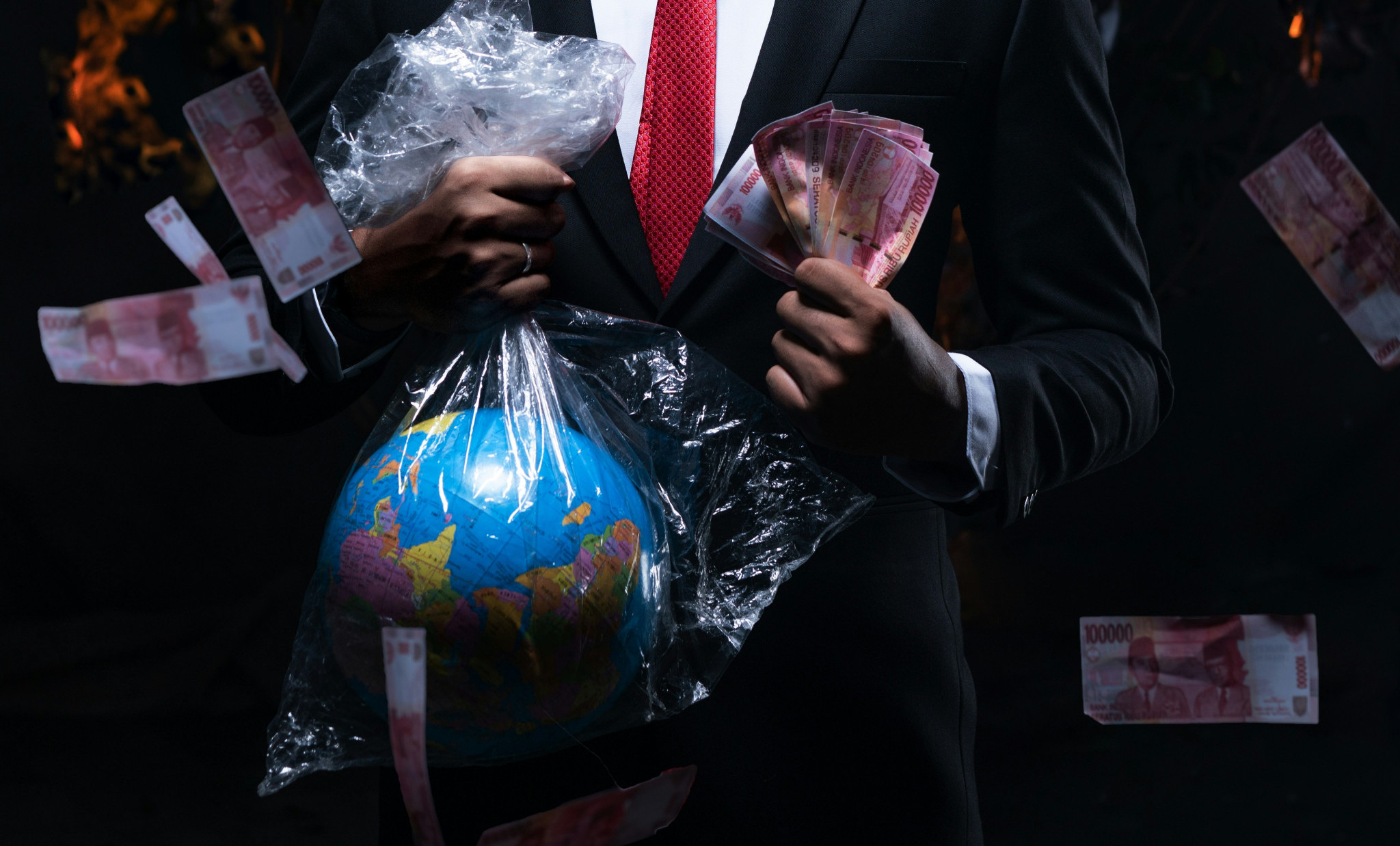
Why would a sitting prime minister allow this brazen? Because this approach was useful to him. This text explains why—and how this pattern works in many countries.
Part 1: Why Politicians need Oligarchs
Explained: What is an Oligarch?
It is not just about greed. That would be to easy. The real explanation is structural in nature: those who want to stay in power need money, influence, and allies. And that is exactly what oligarchs provide. Political scientist Bálint Magyar calls this a “poligarch”: The state creates oligarchs who are entirely dependent on the goodwill of the head of government. Unlike independent entrepreneurs, they risk everything if they become disloyal. They are the government’s wallet.
Four things politicians need oligarchs for
Financing election campaigns – without leaving a trace
Elections cost money – a lot of money. And this money often has to flow through channels that do not appear in the official books. One example: Robert Fico’s Smer party was built on this model from inception: when Fico left the Party of the Democratic Left in 1999, the Smer party received no state funding and depended entirely on wealthy backers. Until the 2002 elections, Smer’s expenses exceeded the legal limits many times over—financed by oligarchs who wanted to back the right horse.
Controlling the media
In all the countries studied, it works the same way: loyal oligarchs buy media companies—with money they earned through government contracts. These media then report in the way the government wants.
In Hungary, around 500 media companies were consolidated in 2018 into a single government-aligned foundation: KESMA. In Turkey, in 2018, the country’s largest media group went to a government-aligned company – financed through a loan from a state bank. This allows Erdoğan supporters to control around 90 percent of the country’s total newspaper circulation.
Protecting the politician – legally
Oligarchs manage money in a way that prevents the head of government from being directly linked to it. The Pandora Papers showed that close associates of Orbán maintained secret offshore companies in the British Virgin Islands. In Russia, investigations uncovered a palace on the Black Sea worth 1.35 billion dollars – held through a network of intermediaries. The head of state benefits. The oligarch bears the risk. That’s the deal.
Controlling entire sectors of the economy
Whoever has loyal oligarchs at the top of key companies controls entire sectors of the economy. In Hungary, billions in state assets were transferred to 32 foundations—controlled by government allies. Even a new government can hardly reverse this.
„Reliability was the most important criterion—family, childhood friends, people who had enough to lose to remain loyal.“ — Máté Hajba, Republikon-Institut, Budapest
Part 2: Why Politicians need the mafia
Explained: What do we mean by “mafia”?
Oligarchs serve as a wallet and a shield. Criminal networks serve as the fist. Why? A politician who governs in a democracy has a problem: he cannot simply deploy the military against critics. He cannot officially ban the press. He cannot openly threaten journalists. Criminals can do this for him—and he can still say: I had nothing to do with it.
Four functions of organized crime
Getting things done the state cannot do publicly
In Belgrade in 2016, around 30 masked men demolished an entire neighborhood at dawn – to make way for a construction project. The police did not intervene. No one was arrested. The alleged crime boss Veljko Belivuk later stated that he had used his network to intimidate protesters and to control football hooligans on behalf of people close to the government.
Intimidating journalists and critics
The Slovak journalist Ján Kuciak investigated the connections of the Italian mafia (‘Ndrangheta) to Slovak politicians. In February 2018, he was shot dead along with his fiancée. His death cost 70,000 euros.
Laundering dirty money
Criminal networks provide the infrastructure to move and hide money abroad. The OCCRP project “Russian Laundromat” uncovered a $20 billion system: 21 British shell companies, corrupt Moldovan judges and 19 Russian banks – to transfer dirty money to Europe. Politicians use these structures to secure their wealth.
No one’s fault – officially
When a journalist dies, the politician is far away. When money is laundered, his name appears nowhere. In Serbia, the network was so dense that, according to researchers, a “multidimensional takeover of the state” emerged – so many connections, so many intermediaries, that individual responsibility is hardly traceable.
Part 3: How the system is built
Three Phases
Phase 1: Take over the judiciary
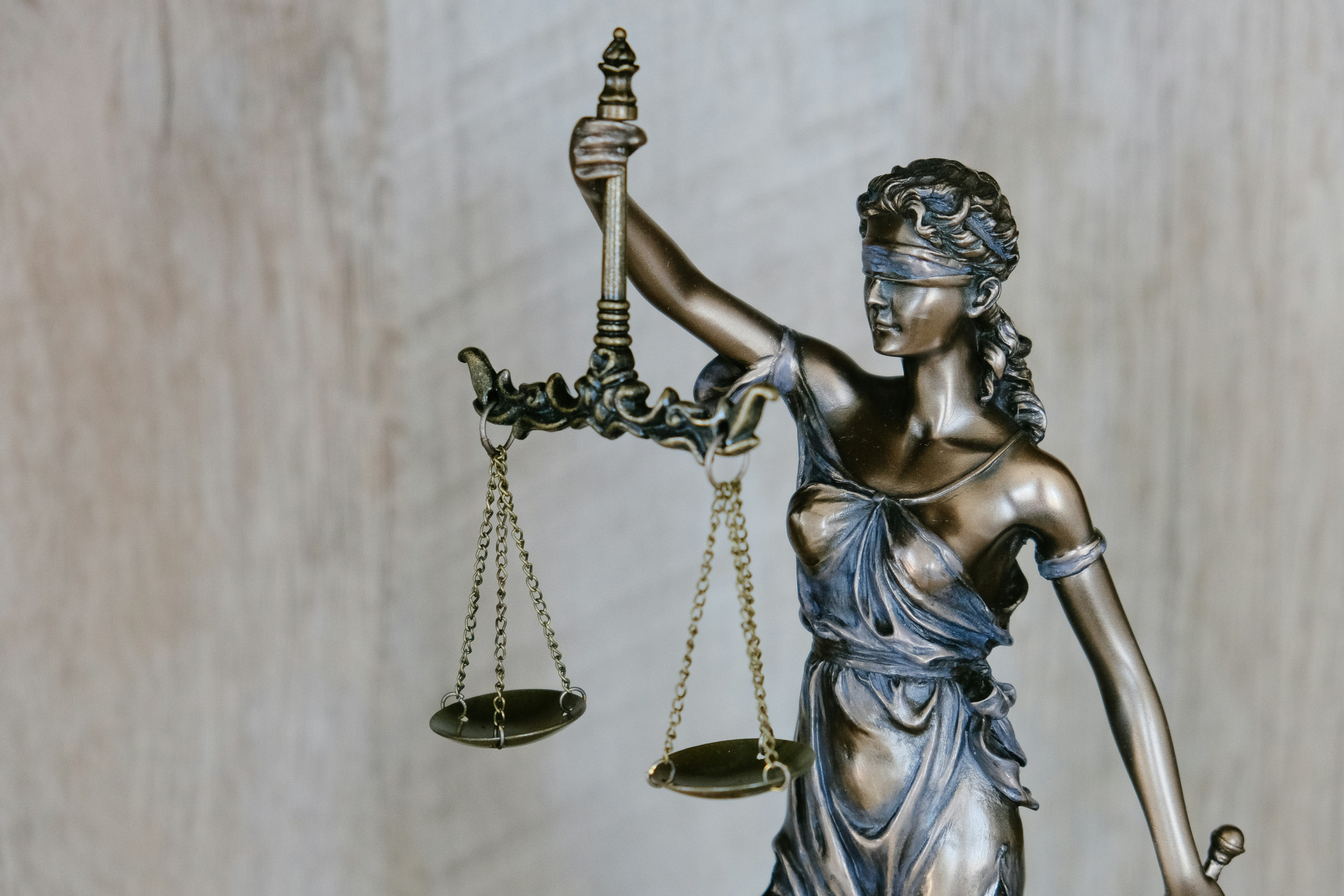
The first target is always the courts. Controlling the parliament allows one to pass laws, but if courts can overturn those laws, it’s of little use. So the courts must also be “secured.”
In Hungary, the Constitutional Court was expanded from 11 to 15 members – and filled with loyal individuals. The retirement age for judges was lowered, causing 274 judges to leave early. Fico won a fourth term and immediately dissolved the Special Prosecutor’s Office.
In Ungarn wurde das Verfassungsgericht von 11 auf 15 Mitglieder erweitert – und mit loyalen Personen besetzt. Das Rentenalter für Richter wurde gesenkt, damit 274 Richter vorzeitig ausschieden. In der Slowakei wurde nach Ficos Rückkehr an seinem ersten Tag das Büro der Sonderstaatsanwaltschaft aufgelöst.
„’Judicial reforms’ sound boring. That’s exactly why the public barely notices what’s really happening.“ – Viera Zuborova, CORRECTIV
Phase 2: Creating dependent oligarchs
The most important channel: public contracts. In Hungary, according to Transparency International, 35 percent of all contracts were awarded without genuine competition – double the EU average. In Turkey, the government changed the public procurement law a total of 192 times. The principle: the state directs resources to selected individuals. They become rich – and therefore dependent.
Phase 3: Integrating criminal networks
The final phase links organized crime with the government. In Slovakia, decrypted messages from businessman Marián Kočner’s phone revealed systematic corruption of judges at all levels. This led to 13 judges being arrested and three consecutive police chiefs being charged with corruption. The European Parliament officially stated: “Organized crime in the Western Balkans is a structural problem with deep-rooted connections to business and state institutions.”
Five countries compared
What is this about?
Hungary, Slovakia, Serbia, Turkey, and Russia are very different countries. But they have all developed similar patterns: institutions are taken over, oligarchs are created, criminal networks are integrated.
Country profile: Hungary
Orbán has gradually taken control of the courts, media, and the prosecutor’s office since 2010. He created a class of wealthy allies who are entirely dependent on him. Those who step out of line lose everything – like the former oligarch Simicska, whose empire was systematically dismantled after his break with Orbán.
The key was the two-thirds majority in 2010. This allowed Fidesz to replace the constitution, fill the Constitutional Court with loyal judges, and push over 1,600 journalists out of public broadcasting. In 2018, 476 media outlets were consolidated into the KESMA Foundation – without any antitrust review.
„This is not corruption within a democracy. The state has been privatized.“ — Bálint Magyar, sociologist
Lőrinc Mészárosa – childhood friend of Orbán and former gas fitter – thus became the richest man in Hungary. In January 2025, the U.S. sanctioned Orbán confidant Antal Rogán. He remained in office. Hungary has been the most corrupt EU member for four consecutive years.
Country profile: Slovakia
Slovakia struggles cyclically: crisis, reform, relapse. The 2018 murder of journalist Ján Kuciak in Slovakia exposed mafia connections worldwide. Since Fico’s return in 2023, reforms are being dismantled faster than they were ever implemented.
For over twelve years, Fico used the police and tax authorities as political instruments. The Italian mafia organization ‘Ndrangheta built a network in eastern Slovakia – with connections reaching into the Prime Minister’s office. On February 21, 2018, journalist Ján Kuciak and his fiancée were shot dead. This sparked the largest protests since 1989. Fico resigned.
„Each relapse is faster and more systemic than the previous one.“ – Ingrid Borarosova, political scientist
He returned in 2023. On his first day: the Special Prosecutor’s office was dissolved, the prosecutor Kováčik, convicted of corruption, was released, and elite investigators were dismissed. What Orbán spent a decade achieving, Fico is trying to implement in just a few years.
Country profile: Serbia
Serbia was shaped by war. The criminal networks from that time are still part of the political system today. In 2003, the only true reformer was assassinated. Since then, fear has ruled.
Under Vučić elections take place, but institutions are hollowed out. All five national TV channels are under state influence. Crime boss Veljko Belivuk suppressed protests on behalf of government-aligned figures – in return for de facto immunity.
„Every state has its mafia—but only in Serbia does the mafia have its state.“ — Serbian proverb from the 1990s
On November 1, 2024, the canopy of the Novi Sad train station collapsed. 16 people died. An independent commission found that corruption had led to lowered construction standards. This was followed by 2,400 demonstrations in 400 cities – the largest protests since the fall of Milošević. Vučić retained control.
Country profile: Turkey
Erdoğan built a class of entrepreneurs that cannot survive without state contracts. Five corporations – the “Gang of Five” – monopolize public contracts and also own the country’s largest media outlets. Those who report critically pay the price.
When corruption investigations in 2013 targeted Erdoğan’s inner circle, the prosecutors were dismissed. The investigation was declared a “foreign coup attempt.” Media mogul Aydın Doğan received a $2.5 billion tax penalty after critical reporting – and by 2018, he had sold his entire media empire to a government-aligned company.
„Once the public is divided, everything else follows. Media control feels like protection; abuse of the judiciary feels like justice.“ — Barış Paksoy, CORRECTIV
Country profile: Russia
Russia’s kleptocracy was no accident. The privatization of the 1990s was used as a political tool. Today, private wealth, political survival, and the state are practically inseparable – and the system is actively exported abroad.
Putin was promising in 2000 to rein in the oligarchs. What he created was their replacement. Media oligarch Gusinsky was arrested and only released after selling his media group to Gazprom for $300 million. Khodorkovsky, then Russia’s richest man, was imprisoned in 2003. The message: those who don’t comply lose everything.
After the invasion of Ukraine in 2022, loyalty alone is no longer enough. Complete integration is required. Those with assets abroad or a second citizenship are considered unreliable. The system actively exports itself: pro-Kremlin networks acquire strategic assets across Europe – not as a byproduct of kleptocracy, but as one of its central instruments.
What does all this mean?
Freedom House reported in 2020 that there are fewer democracies in the post-communist space than at any time since 1995. Reporters Without Borders noted in 2025 a historic low for press freedom: more than half of the world’s population lives under conditions where independent journalism is very difficult or even impossible.
„The system has adapted and endured. It doesn’t just survive pressure—it is designed to absorb it.“ – Sergey Lukashevkiy, Radio Sakharov, CORRECTIV
What can be done?
The first approach: containment. This means closing financial loopholes that enable kleptocratic money; strengthening international cooperation; treating systemic corruption as a security threat – not just a political problem.
The other approach would be: adaptation. This means watching this model spread – until Western democracies themselves become the target.
The crucial question
This series doesn’t direct its questions only at Orbán, Vučić, or Putin. It asks about the political and economic conditions that make such autocrats possible in the first place – and about the democratic societies that are structurally more vulnerable than they have been willing to admit.
The question is no longer whether democracies can afford to confront this system. The question is whether they can afford not to.
_ _ _ _ _ _ _ _ _
Editing: Samira Joy Frauwallner
Factcheck: Minou Becker
Illustration: Viera Zuborova

