

In this article series, we take a second look at current events in countries that often remain only briefly spotlighted in German reporting. Together with local experts, we ask: What political and social developments lie behind the current events that we see in the news? What does this mean for democracy and media freedom? With our exile expertise, we want to reveal global connections and understand what we can learn from this for free, democratic coexistence.
What does Deniz Undav tell us about Kurdish identity?
When German-Kurdish-Yazidi footballer Deniz Undav celebrates a goal, the debate among the Kurdish and Yazidi communities sometimes moves quickly from football to identity. For some Kurds, he is a Kurdish success story. For many Yazidis, he is also a rare public figure through whom a persecuted community becomes visible in German national life. When he was reported to have corrected a journalist by saying, “First of all, I am Kurdish,” the sentence travelled far beyond sport.
Recent coverage has described him as both Kurdish and Yazidi, but the reactions around him reveal a deeper tension: whether Kurdishness can include Yazidi identity without absorbing it, and who has the right to define Kurdish identity? When some Kurds refuse to accept Yazidis’ right to define themselves, they reproduce a logic Kurds know too well: the denial of a people’s own name for itself. These contradictions are not confined to Kurdistan. In Germany, where many Kurds and Yazidis live in exile or as descendants of migrants, identity debates often become even sharper.
Multiple Kurdishnesses
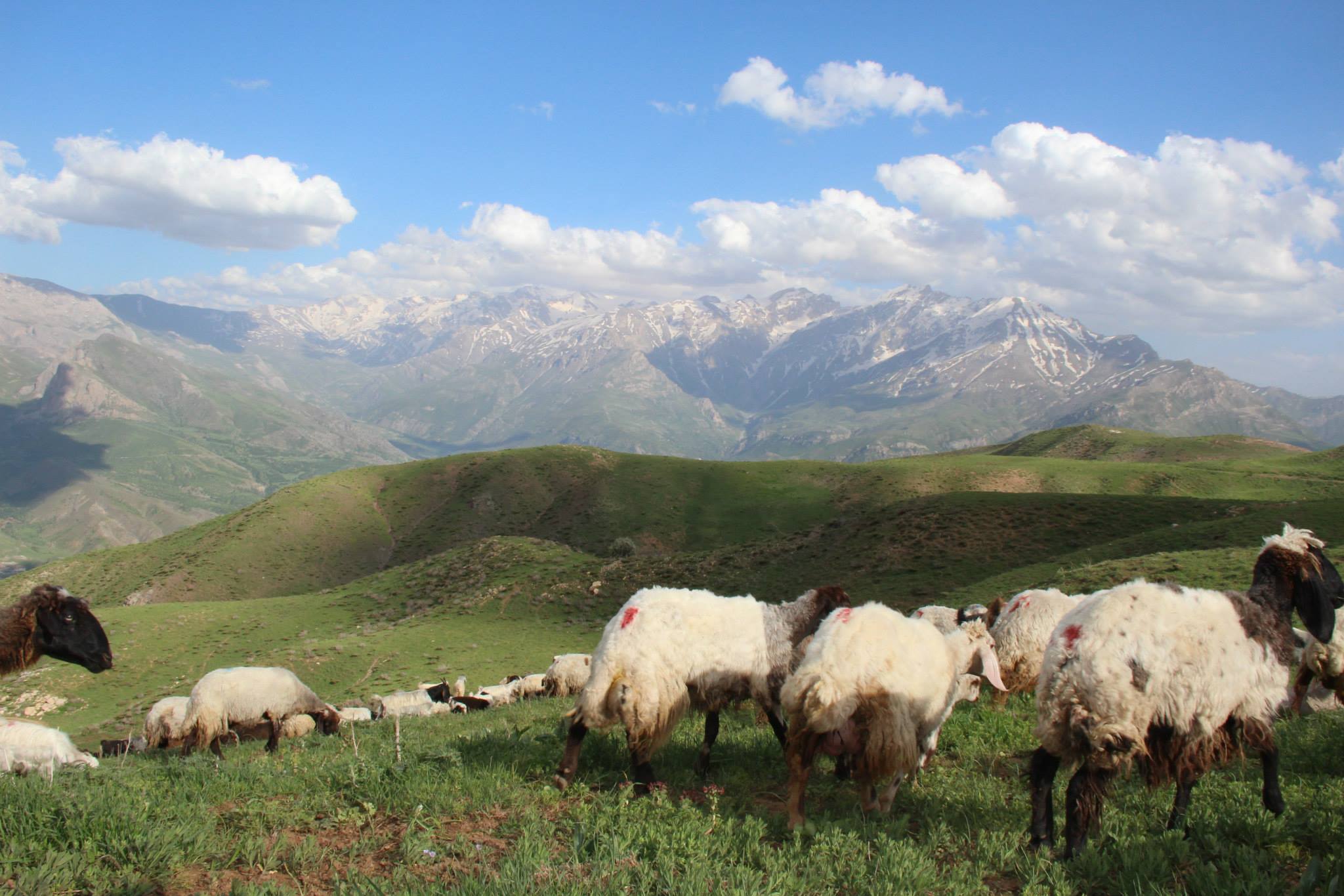
In Germany and in much of Europe and North America, Kurds are often described as stateless people who have got no friends but mountains. But it also hides an essential truth. Kurdish identity is not singular. It is plural, contested, regional, religious, linguistic, ideological and shaped by different state borders.
This matters because “the Kurds” are often misrepresented in two opposite ways. The first comes from the states among which Kurds were divided: Turkey, Iran, Iraq and Syria have historically denied, criminalized, fragmented or folklorized Kurdish identity. The second comes from Western media and political discourse, which often romanticizes Kurds as one people with one political will: secular fighters, mountain rebels, victims, reliable allies, brave women, or eternal stateless democrats. Beneath that, the western countries also treat different Kurdish political movements differently; while Kurdish movements of Iraq and Syria can be celebrated, the Kurdish movement of Turkey can be criminalized and Kurdish movement of Iran can be ignored.
Such images and depictions are incomplete. One denies Kurdish identity; the other simplifies it. Homogeneity is often imagined as a condition for nationhood: one people, one language, one flag, one history. Yet even the most powerful nation-states have failed to produce such sameness. The Kurdish case is not exceptional because Kurds are diverse; it is exceptional because this diversity has developed without a state, across hostile borders and under competing political projects.
Understanding Kurdishness
To understand Kurds, one must begin with borders. A Kurd from Diyarbakir, Erbil, Mahabad, Qamishli or Berlin may share a sense of Kurdishness, but their political memories are not the same. Kurds in Turkey were shaped by decades of denial, assimilation and the conflict between the Turkish state and the PKK. Kurds in Iraq experienced Baathist Arabization, the Anfal genocide, intra-Kurdish civil war, federal autonomy and the politics of oil, salaries and Baghdad-Erbil disputes. Kurds in Syria lived for decades without citizenship and later became central to the Rojava experience. Kurds in Iran carry the memory of Mahabad, executions, uprisings and the constant securitization of Kurdish political life.
Many Kurds do not know much about each other’s histories, memories or geographies. So, for instance, when someone asks, “What do the Kurds want and how is their political vision?” the first answer should be: which Kurds?
Can Kurds understand each other?
Language complicates this further. Kurdish is not one uniform language in everyday life. Kurmanji and Sorani are the two largest Kurdish varieties, but there are also Zazaki, Hawrami, and many local varieties. Kurmanji and Sorani are written in different scripts and are not always mutually intelligible in spoken or written form. This is not merely a technical linguistic point. Language shapes who reads whose literature, who follows whose media, and who feels represented by which Kurdish public sphere.
This is why slogans such as “2+2=1” – used by some diaspora Kurds to say that the four parts of Kurdistan form one homeland – are emotionally powerful but analytically weak. They express longing, not reality. They turn a divided geography into a simple equation. But Kurdistan is not a mathematical formula. No part of Kurdistan is one dialect, one culture, or one politics.
Do Kurds worship the same God?
Religion adds another layer. Kurds are often imagined as Sunni Muslims, but Kurdish society includes Yazidis, Alevis, Yarsanis or Kakayis, Shabak Kurds, Shi’a Kurds, Christians, secular Kurds and others. These are not small subcategories under one national roof. They are communities with distinct memories of persecution, survival, resistance, ritual, trauma and belonging. Yazidi identity, for example, cannot simply be folded into Kurdish nationalism without listening to Yazidis themselves. After the genocide committed by ISIS in Shingal, many Yazidis have insisted more strongly on their own communal identity. Some see themselves as Kurds; others resist being named only as Kurds. Both positions exist, and both must be heard and respected.
Not all Kurdish women are fighting ISIS
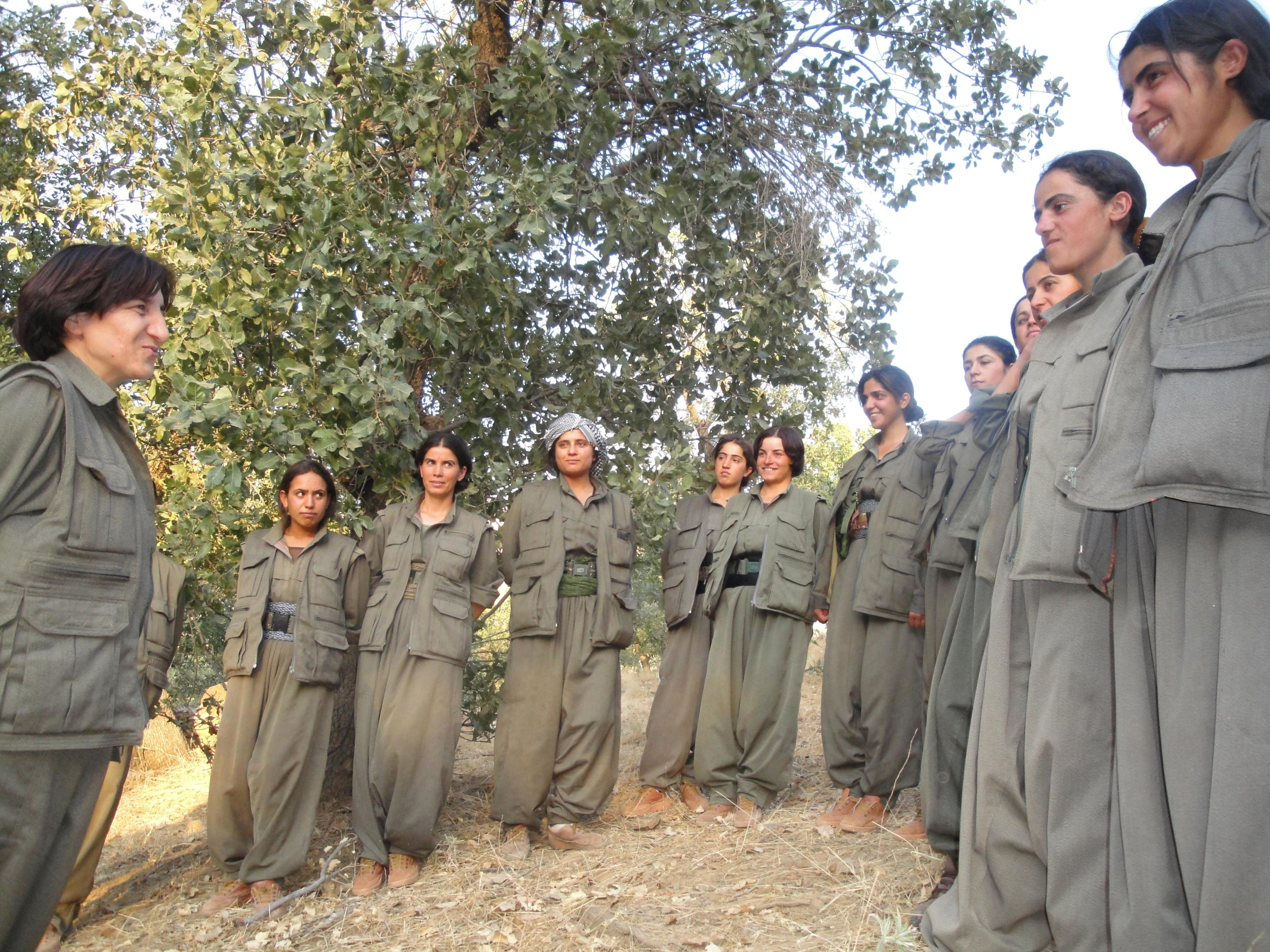
In the West, Kurdish women became internationally visible during the war against ISIS, especially through images of women fighters in Syria. These images were powerful and often inspiring. But they also created another simplification: “Kurdish women” became a symbol of Middle Eastern progressiveness. In reality, the women most associated with this image came largely from the PKK-inspired political world of Syria and Turkey, shaped by Abdullah Ocalan’s ideas of democratic confederalism, women’s liberation and the democratic nation. A group of Kurdish women being emancipatory from a political movement, should not be generalized on all the Kurdish women as this only helps Kurdish patriarchal politics that subjugates women. Yet this image should not hide the patriarchal realities that continue across Kurdish societies, including in places where women have also led political struggles. A woman in Qamishli, a woman in Erbil, a woman in Halabja, a woman in Van and a Kurdish woman in Berlin may all be Kurdish, but they do not live the same Kurdishness.
When Politics Becomes an Identity Issue
Party politics has also become a form of identity. In the Kurdistan Region of Iraq, the rivalry between the KDP and PUK is not only electoral. It is regional, historical, familial, economic and psychological. In October 2024, elections were held in the region, but because the two largest parties failed to reach an agreement after the election, the caretaker government remains in office to this day. This is not merely an administrative failure. This is not a small administrative failure. It shows that Kurdish identity does not automatically produce Kurdish unity. The Kurds have often asked the world to recognize their rights, but Kurdish parties themselves have frequently failed to recognize each other as legitimate partners in a shared political future.
The same is true beyond Iraq. The Rojava revolution in Syria, widely admired internationally after 2012, was not embraced by all Kurdish actors neither inside Rojava nor beyond. Some Kurdish leaders in Iraq saw Rojava through the lens of rivalry with the PKK and through their own geopolitical relationships with Turkey.
Kurdish rivalry arrives in Germany
In 2026, separate major New Years celebrations, the so-called Newroz celebrations, in Bonn and Frankfurt showed how one of the most important Kurdish national festivals can become a stage for competing political projects. The Bonn event was organized by KDP-linked organizations in Germany while the Frankfurt event was organized by those who consider Abdullah Ocalan as their leader. Newroz may be one fire, but it does not illuminate one single Kurdish imagination. There is nothing wrong in that as long as everyone can understand and see these nuances and differences.
Even symbols that appear unifying, such as the Kurdistan flag, are contested. Many Kurds close to the PKK tradition do not treat the Kurdistan Region of Iraq’s flag as the flag of all Kurdistan.
A nation that cannot tolerate internal diversity becomes a prison
This is why some forms of diaspora nationalism worry me. Because Kurds do not have a state, some diaspora Kurds compensate by imagining the nation as more unified, pure and harmonious than it is. Sometimes in Europe, I hear Kurds speak about Arabs as if an entire people, rather than a specific regime, committed genocide against Kurds. Many Arabs were also victims of dictatorship, war and state violence. On social media, Kurdish identity is often compressed into flags, maps, slogans and heroic memories. In Instagram profiles and X bios, Kurdistan appears whole and politically self-evident. The problem is not pride itself, but the attempt to turn a diverse people into an imagined unity that has never existed in such a simple form.
This is why the debate around Deniz Undav is fascinating. It is not only about whether he is Kurdish or Yazidi. He can be German, Kurdish and Yazidi at once. That plurality should not be treated as a contradiction. But the competition around his identity shows how Kurdish nationalism sometimes wants to erase the diversity, this is why minorities sometimes fear that homogenizing Kurdistan society turns to erasing their identity.
Then let’s try Kurdishness “on the second glance”
Kurdishness is a shared historical wound, but also a field of disagreements. It is language and memory, but also religion and region. It is resistance, but also rivalry. It is the dream of freedom, but also the reality of parties, patriarchy, class, exile and ideology.
To look at Kurds “on the second glance” means refusing both denial and romanticization. It means seeing Kurds not as a homogeneous nation waiting to be discovered, but as a complex society.
The question, then, is not whether Kurds are one people or many. They are both. They share a name, a memory and a long history of oppression. But they do not share a single identity or political future. The democratic answer to Kurdish oppression should not be another forced homogeneity. It should be a Kurdish politics capable of protecting plurality.
How can I stay informed?
- The Amargi writes about the politics, geopolitics, socio-economic developments, and culture of Kurdistan and the wider region. The exilemedia offers news, analysis, interviews, and multimedia content with a focus on depth and independence.
- The Kurdish Studies Journal is for those seeking a deeper academic understanding of the Kurds and Kurdistan. It is one of the most important scholarly platforms in the field when it comes to the understanding of Kurdish diversity.
– – – – – – – – – – – – – – – – – – –
Editing: Minou Becker
Illustration: Kamal Chomani

