
This special series draws on CORRECTIV.Exile’s network of journalists and professionals remains under pressure to document how authoritarian leaders are learning from one another and accelerating democratic backsliding worldwide. We aim to reveal the patterns: Hungary’s methods replicated in Poland, Russia’s “foreign agent” laws spreading to Georgia and Serbia. This is not an isolated crisis but a coordinated global shift – a warning before legal becomes irreversible, before democracy becomes memory.
In the state election on 6 September 2026, Ulrich Siegmund led the AfD to 43.8 percent in Saxony-Anhalt, the highest share any party has won there since reunification and three seats short of a majority. Asked by ARD after the election what came next, he didn’t mention migration or the economy. He said he would “of course” cancel the media treaty.
Two weeks later the AfD also came first in Mecklenburg-Vorpommern, with 38.2 percent, while Berlin pulled the other way. For now, the firewall holds: no other party will govern with the AfD. But the order of priorities is the story. Canceling the broadcasting treaties is item one of the AfD’s 100-day program in Saxony-Anhalt, and its program in Mecklenburg-Vorpommern targets the NDR treaty. Media analyst Michael Kraske, writing in journalist.de, called the plan what it is: not reform, but demolition.

Bitte nehmen Sie sich einen Moment Zeit.
Nachrichten und Recherchen sind unerlässlich, damit Sie sich eine Meinung bilden können. Aber die derzeitigen Bedrohungen der freien Presse und der Medienlandschaft sind alarmierend.
Wir fordern die Bundesregierung auf, Pressefreiheit und die Medienvielfalt in Deutschland umfangreich zu schützen. Machen Sie mit.
It is legally possible. A state can leave the MDR treaty with two years’ notice, and in Saxony-Anhalt only with the Landtag’s consent. That is why 39 of 83 seats matter so much. This chapter asks a simple question: why do movements like the AfD go after public broadcasters first, and what does it look like when they succeed? The answer is clear from the inside. I’m Slovak, and I watched it happen at home.
Why public media are the first target

Public broadcasters are targeted first because they are both uniquely valuable and uniquely exposed. They reach almost everyone, carry a presumption of neutrality no party outlet can buy, and are funded by law rather than by a market. That makes them hard to out-compete and easy to control through the board or the budget.
Hungary shows the captured version. After 2010, Viktor Orbán’s government merged the state broadcasters into a single holding, MTVA, pushed out more than 1,600 journalists and media workers, and replaced them with loyal staff. By the end, MTVA ran on more than 430 million euros a year.
Sometimes capture isn’t the goal at all. Cut the budget, let quality slide, and the broadcaster loses relevance on its own. The AfD’s proposed “Grundfunk,” a stripped-down basic service, belongs to this category. A broadcaster nobody watches doesn’t need to be captured, because its public role is already gone.
Slovakia: how to take apart a broadcaster in 18 months
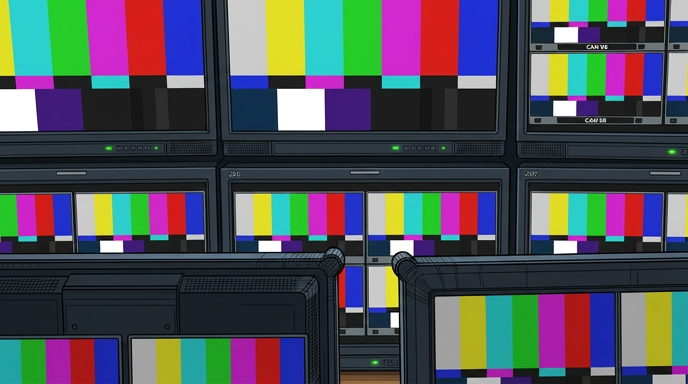
I’m not writing this part from the outside. I watched it happen to RTVS, and then to STVR once they’d finished renaming it, in real time. I have friends and former colleagues who worked in that building. I remember the quiet dread of checking whether someone I knew was on the list, and I know people who got the call telling them their job was suddenly “redundant.” So when a party with nearly 44 percent of the vote makes “cancel the media treaties” its first promise, I don’t hear a policy debate. I hear the opening line of a story about who gets to speak, who gets silenced, and what happens next.
First, they changed who holds the keys. Nobody stormed a newsroom. Slovakia’s broadcasting law, passed in June 2024, rewired the council that appoints the director. According to Denník N’s Filip Struhárik and Lucia Osvaldová, that council has since been chaired by people who also work for the Ministry of Culture. The referee now reports to one of the two teams. The European Commission has sent Slovakia formal warnings under the European Media Freedom Act.
Then they turned off the tap. Ironically, the funding model was built to protect the broadcaster: in 2023 the license fee was replaced by a fixed 0.17 percent of GDP to keep the executive’s hands off the money. Robert Fico’s government rewrote the number, cutting funding from a planned €186 million to €131 million. The quieter cuts said more. A children’s animation series ten years in the making “ran out of money,” as producer Katarína Kerekesová told Denník N. It came from the last studio in the country making original children’s television, and its end barely made the news.
Then came the list. In March 2026, around 60 of roughly 1,700 staff were told their positions were “redundant,” as journalist Soňa Gyarfašová described to Denník N. Almost everyone who had organized against the restructuring found their name on it. One had spent fifteen years recording the last survivors of the Holocaust and communism; her unfinished interviews in Melbourne and Sydney will now never be finished. A presenter who defended his colleagues on air found his contract quietly not renewed a few days later.
They didn’t reform the old house; they knocked it down. RTVS was legally erased and STVR built in its place. Every protection built up over decades vanished in one afternoon, and the director’s remaining term ended on the spot. Two years on, the new institution even went to air with three different logos in a single broadcast.
Every step had a boring name: efficiency, restructuring, a management decision. Together, they show what was built: not a censored broadcaster, but one so hollowed out that nobody needs to silence it. Only 19 percent of Slovaks think STVR’s news is good for the country, while 33 percent say it harms. Since the reform, its weekly reach has fallen by 7 points and its trust score by 10, showing how quickly public confidence can collapse and why that matters.
Yet people did not simply accept it. In June 2026, an open letter in Denník N, signed by two former culture ministers, academics and artists, called it what it was: a collapse in trust with no single culprit. And capture is not automatic either. This spring, a bill to concentrate media regulation in a new “National Media Office” was withdrawn by its own sponsors after failing to win coalition support.
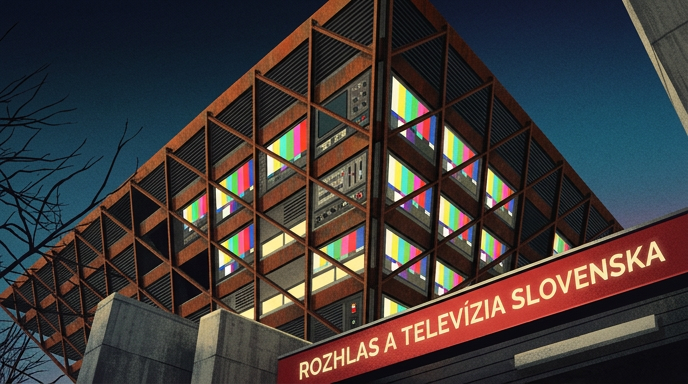
Slovakia is not an exception, and the stakes are wider than one broadcaster: once public media is weakened, the risk spreads beyond one institution.
I’ve told the Slovak story at length because it’s mine. The uncomfortable truth is that almost nothing in it is original. What happened to RTVS was a run-through of a playbook, and the same moves recur across Europe in different orders and at different speeds. The point is simple: once you’ve watched one demolition, you recognize the tools in everyone else’s hands and the danger they pose to public media everywhere.
- Rewrite the rules: change who appoints the people in charge, or abolish the institution so every mandate resets at once. Treaty cancellation, the AfD’s plan, attacks the same legal foundation.
- The second tool is money: you can’t fire a broadcaster, but you can starve it, as in Slovakia. In Poland, the other side of the political spectrum pulled the lever: when the Tusk government moved to reclaim TVP in late 2023, President Duda vetoed its funding. Two years on, a durable new media law still hasn’t passed.
- The third tool is the purge. Once governance is captured, staffing follows. Hungary’s more than 1,600 dismissals after 2010 are the largest documented case in an EU member state. Slovakia’s March 2026 list was smaller but followed the same logic: it hit those who had protested first. Dressing a political clear-out up as “restructuring” makes it far harder to resist.
- The fourth tool is patience: Italy never abolished RAI; the governing coalition colonized it, and in September 2026 the European Commission did not rule out infringement proceedings. Serbia, where RTS has long been seen as captured, shows where that road ends: trust in news of 19 percent, among Europe’s lowest.
Hungary shows the playbook can also run in reverse. After Péter Magyar’s Tisza party won a two-thirds majority in April 2026, a new media law removed the old leadership. On 7 July, the flagship channel went dark behind an apology: “Public media cannot lie. We apologize because we did this anyway.” On 26 July, MTVA was formally dissolved. Yet the new government used the captors’ own lever: abolish and rebuild. The real test is whether the result is independent or just recolored.
What Germany should take from this
Germany’s defenses are a near mirror image of Slovakia’s weaknesses. An independent commission, the KEF, sets the fee, and the Constitutional Court treats that funding as part of freedom of broadcasting. It has already defended that funding against this very state: when Saxony-Anhalt blocked a fee increase in 2020, the court ruled in 2021 that the refusal violated freedom of broadcasting, and that only all sixteen states together, never one alone, may depart from the commission’s recommendation.
The AfD cannot act alone either. The MDR treaty can be canceled only with two years’ notice and the Landtag’s consent, which the AfD lacks with 39 of 83 seats, and only a cancellation declared by the end of 2026 could take effect in 2029. Even then, the MDR would continue for Saxony and Thuringia, and it has said it will take the matter to court. Germany has been here once before: in 1978 Schleswig-Holstein canceled the NDR treaty over supposedly left-wing programs. In 1980 the Federal Administrative Court ruled that the state could withdraw, but the NDR itself would survive. The three states then agreed on a new treaty, and Schleswig-Holstein stayed.
Three lessons follow. The fight rarely announces itself as censorship; it starts as a funding formula or a treaty vote. Courts and referenda, not elections alone, decide whether capture sticks. And the damage doesn’t require full capture; even a failed withdrawal would harm the system’s legitimacy. Slovakia lost its broadcaster to a law, but it lost the public’s trust over years of noise surrounding it, showing how much is at stake before any takeover succeeds.
The AfD in Saxony-Anhalt cannot pass the cancellation on its own. It can keep making the noise. And on 6 September, almost 44 percent of voters told it to keep going, raising the stakes for what comes next.
_ _ _ _ _ _ _ _ _ _ _ _ _ _ _ _ _ _ _ _ _ _ _ _ _ _ _ _ _
Redigatur: Minou Becker, Rebekka Schäfer
Grafiken: Viera Zuborova

