

In this article series, we take a second look at current events in countries that often remain only briefly spotlighted in German reporting. Together with local experts, we ask: What political and social developments lie behind the current events that we see in the news? What does this mean for democracy and media freedom? With our exile expertise, we want to reveal global connections and understand what we can learn from this for free, democratic coexistence.
On 17 December 2025, security officers carried out coordinated raids on the homes of Indigenous activists that represent indigenous small nations across Russia. The timing was deliberate: by starting at exactly the same moment, investigators ensured that the activists could not warn one another or coordinate a response.
The searches followed the same pattern everywhere. Officers spent hours searching homes, interrogating activists, confiscating computers, phones and documents, and warning that they would return.
How did Indigenous activists become terrorists in the eyes of the Russian state? The answer begins decades earlier.
Who are these “Indigenous Small-Numbered People of Russia”?
Russia is often perceived in Germany as a homogeneous society. In reality, it is a multinational state with 190 ethnic groups. It is also home to Indigenous communities that live in their traditional territories, maintain their traditional ways of life, and identify as distinct ethnic communities. In any country’s context, these numbers might seem small, but in the Russian context, they are especially impressive. In a country with 146 million people, there are nations with only hundreds of people left.
Russian law recognises only the “Indigenous Small-Numbered Peoples of Russia”: 47 groups, each with a population of fewer than 50,000 people. Most of them live in the North, Siberia, and the Russian Far East and make up only a small share of the population in their republics and regions. Under Russian law, these groups should receive special guarantees on rights to land and natural resources. Their cultures and languages should also be protected because of their small populations.
Larger groups, such as the Yakuts, Buryats, and Tuvans, are not recognised as Indigenous people and have different legal status. The experts highlight that this division creates a structural problem: a significant number of Indigenous peoples in Russia can be recognised as Indigenous under international standards, and do not fall under the Indigenous small-numbered people status because of population size.
For instance, The Chulym people, who live along the Chulym River in southwestern Siberia, number only 382 and just 10 people still speak the Chulym language. Or The Sámi of Russia, who live on the Kola Peninsula, number only 1,390. Each nation has its own culture and tradition.
The Sámi, for example, call themselves “the people of the eight seasons”. Rather than dividing the year into spring, summer, autumn and winter, they traditionally recognise eight distinct seasons, reflecting the changing cycles of reindeer herding, fishing and food gathering.
These territories are also at the heart of Russia’s extractive economy. Around 85 per cent of the country’s natural gas and a big amount of its oil are produced on lands traditionally inhabited by Indigenous peoples. Conflicts over mining, oil and gas development therefore often become conflicts over Indigenous rights.
Climate change is compounding these pressures. Permafrost across the Russian North has warmed by one to two degrees over the past three decades, thawing ground that reindeer herders, hunters and fishers rely on to judge safe travel and grazing routes.
Indigenous cultures have always depended on passing knowledge from one generation to the next. During the Soviet period, however, state education often worked in the opposite direction. Across the Soviet Union, Indigenous children were routinely sent to boarding schools far from their families. There, Russian became the language of education, while Indigenous languages were treated as obstacles to integration:
“I was born into a family of reindeer herders and fishermen. Everyone around me spoke Sámi. But when I was a child, my family decided I should become the first person to receive a proper education. I was sent to a boarding school, where I spent eleven years. That’s where I lost my language,” – Valentina Sovkina, representative of the Sámi people.
But everything started to change after the collapse of the Soviet Union.
Ten years of freedom
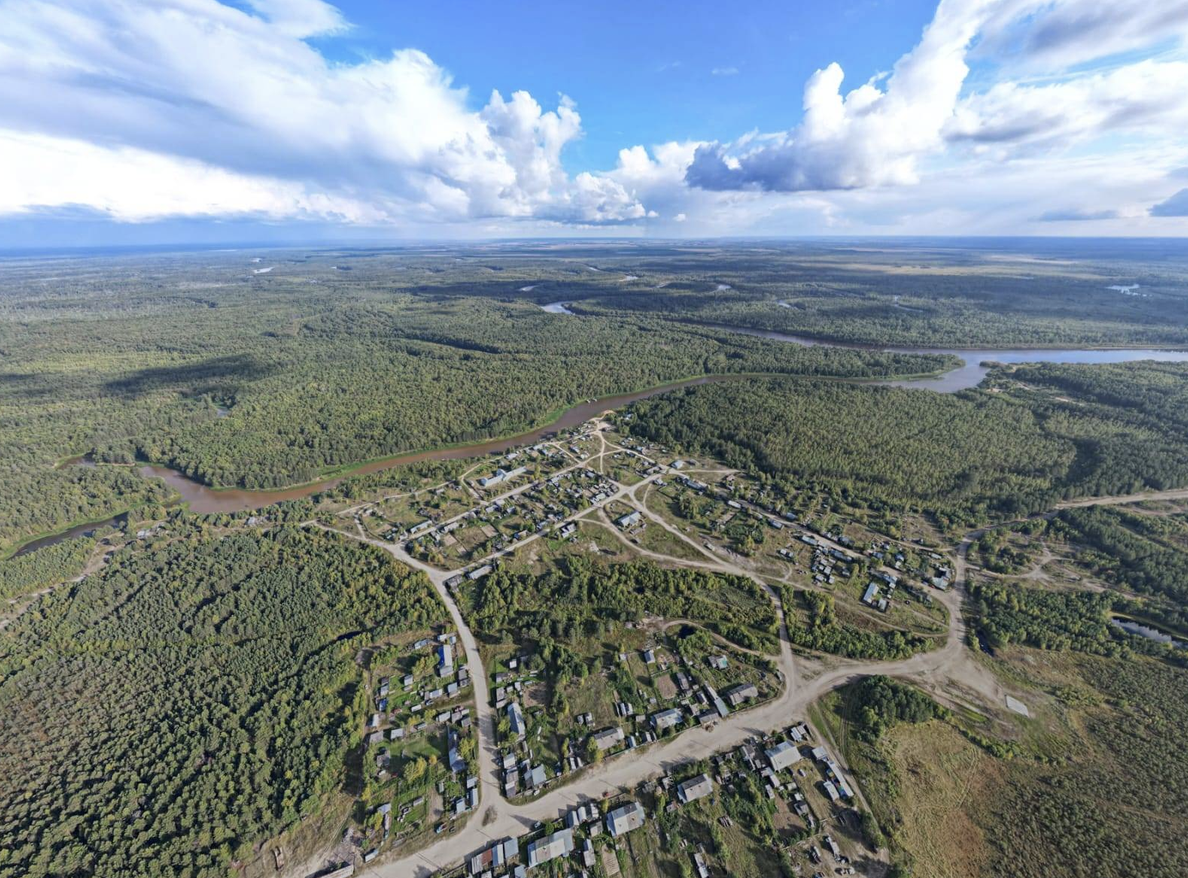
The 1990s are often remembered in Russia as a decade of political chaos but also of unprecedented freedom for independent media and civil society. For Indigenous peoples, they became a brief period of cultural and political revival.
Internationally, Indigenous rights were only beginning to gain recognition. The UN Declaration on the Rights of Indigenous Peoples had not yet been adopted. Although countries such as Canada, the United States and the Nordic states had already developed systems for recognising Indigenous peoples, many fundamental rights, including self-determination and land rights, remained contested.
Russia, surprisingly, moved in a progressive direction. During the early 1990s, the government adopted legislation that recognised Indigenous self-government, allowing communities to establish representative bodies and participate in decisions affecting their traditional territories.
Perhaps the most important achievement of the decade, however, was the freedom to organise.
In 1993, Indigenous communities founded the Russian Association of Indigenous Peoples of the North (RAIPON), bringing together representatives of 40 Indigenous nations. For the first time, Indigenous leaders of these small nations from across the country worked together, travelled abroad, and exchanged experiences with Indigenous communities around the world.
The Soviet boarding school system for Indigenous children was dismantled. Communities gained the right to include Indigenous languages in local school curriculum. Textbooks also began to change.
“Our children never saw their own lives reflected in those books. The exercises showed swimming pools and paved roads – things children in remote northern villages had never even seen. In the 1990s, we could create national schools and change textbooks – added examples with motorboats, traditional games, food preparation, hunting and fishing – things they actually knew,” Vyacheslav Shadrin, Yukaghir activist
Foreign researchers and visitors began travelling to Indigenous communities across Russia. “Suddenly we realised that our people, our language and our traditions were unique. It had a profound effect on our children. ‘A Japanese researcher has come! An American! A German! Someone from Denmark!’ Foreigners had always seemed like people from another world,” Shadrin recalls.
Twenty Years of Repression
Throughout the 2000s, while many countries strengthened the rights of Indigenous peoples and increasingly recognised their right to self-determination, Russia moved in the opposite direction. The transformation did not happen overnight. Like many other freedoms in Russia, Indigenous rights were dismantled gradually.
The first step came with what Vladimir Putin called the “vertical of power” – a system designed to centralise political authority in the hands of the federal government. As power became increasingly concentrated in Moscow, the federal authorities introduced unified legislation governing land and natural resources.
For Indigenous communities, the consequences were profound. Many of the legal guarantees that had protected their traditional territories were weakened, and communities lost much of their ability to influence decisions affecting the land on which their livelihoods depended.
The principle of consent was replaced by one of notification. Communities could still be informed about industrial projects on their traditional territories, but they no longer had the legal power to stop them.
Foreign Agents
Over the following years, the State Duma adopted a series of laws on “foreign agents” and “undesirable organisations”. Although these measures affected the entire non-governmental sector, Indigenous organisations were among those increasingly caught in their scope.
At first, the laws did not immediately prevent activists from working. Instead, they slowly changed public perception. Indigenous leaders who had spent years cooperating with international organisations suddenly found themselves portrayed as agents of foreign influence. Some local media began publishing articles suggesting that their work threatened Russia’s national security. The campaign soon moved beyond propaganda.
In 2012, the Ministry of Justice ordered the dissolution of RAIPON, Russia’s largest Indigenous organisation. A new loyal RAIPON with loyal government representatives was established instead.
“From this moment it was already very clear that the government is actively involved in the Indigenous agenda and sees the rights of Indigenous peoples as a subject of state security.” – Olga Podoplelova, human rights lawyer
As a response to RAIPON’s structural change, activists created a new organisation called Aborigen Forum and continued to collaborate with the UN. But a year later, in 2014, after the annexation of Crimea, the government made the next step, trying to restrict cooperation with the UN.
Russian law enforcement agencies and security services prevented Indigenous leaders from travelling to the first UN World Conference on Indigenous Peoples in New York. The action was more straightforward than ever before. They confiscated or deliberately damaged activists’ passports at border controls or stopped them on the way to the airport. Nadir Bekirov, the head of the Foundation for the Support of the Indigenous Peoples of Crimea, couldn’t leave Simferopol. Masked men blocked his car and seized his passport.
The pressure intensified. Activists increasingly reported surveillance by the security services. Meetings that had once attracted researchers and community representatives were now routinely attended by officials monitoring every discussion.
But Indigenous organisations continued to work despite the growing restrictions. They organised cultural programmes, documented endangered languages, defended traditional territories against industrial development, and represented their communities internationally.
That space disappeared after Russia launched its full-scale invasion of Ukraine.
From Activists to Terrorists
After February 2022, the “crazy printer’s” laws started to be implemented with the same speed as they had been passed. Many Indigenous activists’ international partners like Greenpeace and WWF became undesirable organisations. One after another, they left Russia, leaving Indigenous activists increasingly isolated.
The authorities did not wait long before turning their attention to those who remained.
In the summer of 2024, the Aborigen Forum and many other indigenous organisations were labelled an “extremist organisation”. In December, the authorities went a step further and added it to Russia’s official list of terrorist organisations. This transformed ordinary civic Indigenous activism into a criminal offence.
“Every time we tried to organise an event, the venue cancelled our booking. The university ended its research cooperation with us. But we were still able to attend international meetings and speak about climate issues – deforestation, water pollution and the destruction of our traditional territories,” – Olga Kostrova, Chulym activist.
Even that opportunity soon disappeared.
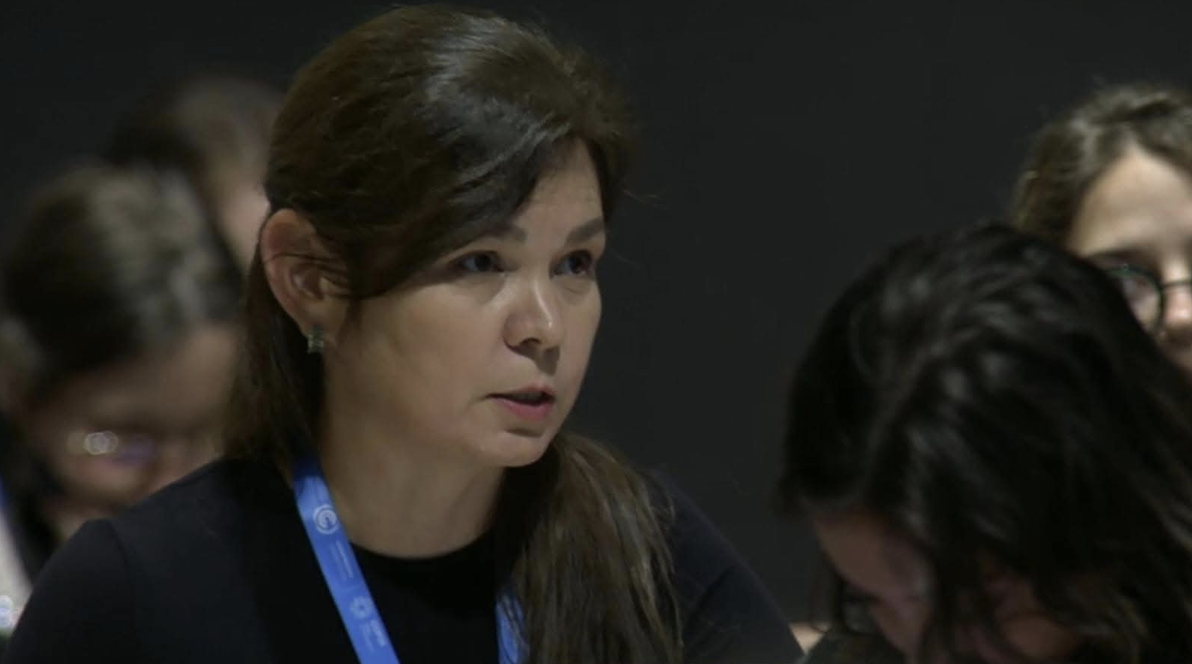
Less than a month after returning from the COP30 climate conference in Brazil, Indigenous activists of these small numbered nations across Russia became the target of one of the largest coordinated operations ever directed against their movement. On December 17, 2025 the security services came to the homes of 17 activists. It was a planned raid, like they are going after an organised criminal gang across the whole country.
It started at exactly the same time, so activists couldn’t coordinate, and it followed the same procedure: long hours of searches, interrogations, the confiscation of intellectual property, and a threat to return.
Activists Daria Egereva and human rights defender Natalia Leongardt, were arrested. They are still in pre-trial detention. Both have been charged with participation in the activities of a terrorist organisation, which can lead to up to 20 years of imprisonment. Other activists could leave the country and now live in exile.
The criminal case itself illustrates how far the authorities have expanded the definition of terrorism.
Officially, the investigation concerns an organisation called the Forum of Free Nations of Post-Russia, which Russia has designated as terrorist. According to the case files, the organisation consists of 172 affiliated groups – Among them is the Aborigen Forum that has no connections to it. The list also includes organisations that have never operated in Russia, groups fighting alongside Ukraine against Russian forces, organisations that apparently do not exist, and even internet memes.
Lawyers representing the activists argue that this lack of coherence is not accidental. Instead, they say, the deliberately broad and confusing structure allows investigators to expand criminal prosecutions whenever they choose, simply by adding new organisations and activists to the list.
On the second Glance: The Cost of Speaking
Today, most of the Indigenous activists who once represented their communities internationally have either left Russia and now work in exile or stopped working publicly. Those who remain in Russia – face an impossible choice: continue their work and risk criminal prosecution, or remain silent.
For many, exile has become the only place from which they can continue speaking about Indigenous rights, environmental protection and the future of their communities.
Meanwhile, Daria Egereva and Natalia Leongardt remain in pre-trial detention. Their next court hearing is scheduled for September.
At the same time, Russian authorities are preparing the International Week of Nations of Russia, an international cultural event intended to demonstrate that the country respects ethnic diversity and remains open to cooperation with Indigenous peoples. The event is curated by Russia’s Federal Security Service.
“When we first met Indigenous peoples from other countries in the 1990s, we learned that some activists had been imprisoned because of their work. At the time, we couldn’t imagine that something like that could ever happen with Indigenous people. Today, it is our reality.” – Vyacheslav Shadrin, Yukaghir activist
How can we stay informed?
December 17 Case – Solidarity Campaign – Follow the latest updates on the criminal cases against Indigenous activists Daria Egereva and Natalia Leongardt. The campaign website brings together background information, campaign materials, social media channels, and ways to support the activists and stay informed about developments.
Arctida is the NGO that produces analysis and investigations on Indigenous Peoples and the Russian Arctic. You can read their latest research on how large-scale infrastructure projects in the Russian Arctic affect Indigenous Peoples from Murmansk to Chukotka and how climate change affects indigenous communities.
– – – – – – – – – – – – – – – – – –
Redaktion: CORRECTIV.Exile editorial team

