Disaster Preparedness in Germany: In an Emergency, Where You Live Matters

Is Germany prepared for blackouts, floods, and war? A nationwide investigation by CORRECTIV reveals that crisis plans, funding, and personnel are often lacking. How well people are protected also depends on where they live.

How well people are protected in a crisis depends heavily on where they live. The local level of emergency preparedness is decisive in how quickly help arrives after a flood, whether essential services can be maintained during a large-scale power cut or whether people are able to find shelter in the event of war.

How well prepared are German local authorities for such crises? Until now, there has been little publicly available data showing how effectively they can protect their populations in an emergency.

CORRECTIV therefore contacted all 401 counties and independent cities in Germany to ask about local emergency preparedness. The findings reveal significant differences in how well local authorities are prepared for crises – and where important measures are lacking.

As the effects of climate change intensify and geopolitical tensions rise, disaster management and civil protection are becoming increasingly important. Responsibility does not rest solely with the authorities and emergency services. Preparedness is not just a task for local government: the public must also know how to respond in an emergency in order to protect themselves and others.

This means people need to understand the risks they face and what to do when disaster strikes. For that, there must be transparency about what preparations have been made locally – and where gaps remain.
No comprehensive emergency plans

The authorities responsible for disaster management are legally required to develop plans for emergencies. These must set out how public authorities and emergency services are to respond in a disaster. The names of these plans, as well as the requirements and responsibilities they contain, vary from state to state and are governed by the relevant state legislation.

But not every local authority has developed such a plan. Of the 267 counties and independent cities that provided a substantive response to CORRECTIV, 38 said they had no emergency plan. A further 25 provided no answer to this question. Of the remaining 203 local authorities, only 106 said their plans had been implemented.

The results of the questionnaire also indicated that there was often a notable absence of such planning specifically in Thuringia, Lower Saxony, Rhineland-Palatinate and Bavaria.

For this investigation, CORRECTIV developed a questionnaire to assess the state of emergency preparedness at local level. Over a period of around 18 months, the questionnaire was revised several times. Experts were consulted first, and extensive enquiries were made at state and county level. Talks with employees of local authorities, members of the German armed forces and organisations involved in emergency and humanitarian relief also informed the revisions.

Questions posed in the questionnaire include how counties and independent cities respond to crises, what they expect of the public and how well prepared they are for different scenarios. These include large-scale power cuts, water shortages and drought, the need for shelters, as well as the ability to respond to external threats that may arise, for example in the event of sabotage, cyberattacks, or military conflicts.  Other questions concern available resources, the funding of emergency preparedness and specific risks posed by climate change in individual regions.

The questionnaire has been sent to local authorities in Germany, Austria, Switzerland, France, Belgium, the United Kingdom, Portugal, Italy, Romania, Estonia, Norway, Iceland and Hungary. Journalists interested in working with us to distribute the questionnaire in other European countries are welcome to contact us at europe@correctiv.org.

Disaster management and civil defence: Who is responsible for what?

For a long time, the distinction was clear: disaster management concerns natural disasters and other civilian emergencies such as floods, wildfires, severe storms and large-scale power cuts. Its purpose is to protect the public and limit the consequences of events that significantly disrupt people’s lives and essential services, without any military conflict being involved.

Civil protection, by contrast, is intended to protect the public in times of heightened tensions or war.

But these boundaries are becoming increasingly blurred. A flood can disrupt the electricity supply; a cyberattack can target hospitals or water utilities. Sometimes it is impossible at first to establish whether a power cut was caused by a technical fault, a natural disaster or deliberate sabotage. Irrespective of the cause, the consequences for emergency services on the ground may be much the same. Multiple threats can also occur simultaneously and even amplify one another.

“We are already facing several crises,” says Jannik Hartmann, an associate fellow at the NATO Defense College who specialises in critical infrastructure and crisis research. “We have war in Europe, acts of sabotage in Germany and, at the same time, heatwaves and severe weather events.”

Dennis Wolf, who is responsible for situation management and command training at the Federal Agency for Technical Relief (THW) in Bonn, also sees changing demands. “In disaster management, the federal states have significantly stepped up their efforts in recent years because of climate change,” Wolf says.

In civil protection, by contrast, existing plans need to be reassessed in light of the changing landscape of threats. “Alongside conventional bombing campaigns, preparedness planning meanwhile involves cyberattacks, large-scale power cuts and other scenarios.”

For counties and independent cities, this raises practical questions. Will crisis management teams and communications continue to function during a power cut? Can emergency services work together with utility providers? Will warnings reach the public?

It is important to note that the German states are generally responsible for disaster management, which is implemented primarily by counties and independent cities. In an emergency, these authorities also coordinate fire services, ambulance services and relief organisations. Their work includes protecting people against floods, fires and other civilian emergencies.

The federal government, on the other hand, is responsible for civil protection – protecting the public against dangers arising from war. Nevertheless, the two systems can work synergistically during emergencies.

Disasters and Civil Defense ​

It is important to note that the German states are generally responsible for disaster management, which is implemented primarily by counties and independent cities. In an emergency, these authorities also coordinate fire services, ambulance services and relief organisations. Their work includes protecting people against floods, fires and other civilian emergencies.

The federal government, on the other hand, is responsible for civil protection – protecting the public against dangers arising from war. Nevertheless, the two systems can work synergistically during emergencies.

Germany handles civil protection at the federal level, while disaster management is generally the responsibility of the states. At local level, counties and independent cities perform key tasks: assessing risks, planning for different scenarios and coordinating fire services, ambulance services and relief organisations in an emergency.

If local resources prove insufficient, assistance can be brought in from other regions or from the federal government. International assistance can also be requested in particularly large-scale emergencies. Tasks include protecting people against natural threats and other civilian emergencies.

Disaster management in peacetime must be distinguished from civil protection, which is a federal responsibility and is mainly intended to protect the public against war-related dangers. The federal government draws on existing disaster management structures and supplements these with equipment, warning systems and other resources.

Although this is about protecting the population from war-related dangers, both sectors can nevertheless work synergistically in emergency situations. 

Civil protection is supported by the federal government, the states and local authorities, as well as fire services, the THW and relief organisations. Volunteers play a central role: many emergency personnel serve on a voluntary basis. In the event of a defence emergency, the federal government is responsible for civil protection.

Heat, Heavy Rain, Flooding and Rising Water

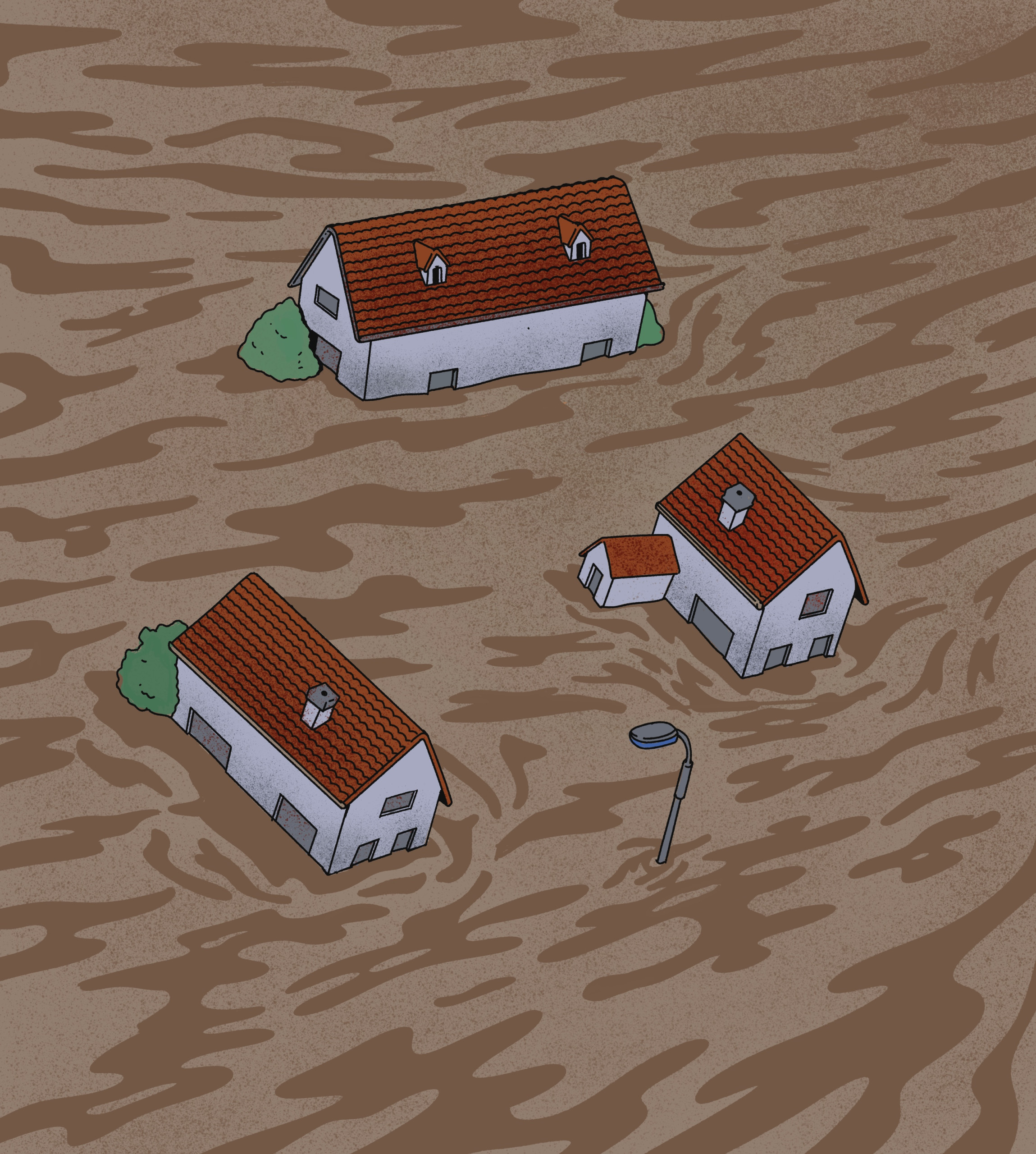
Heat smothers a region for weeks. The ground is dry and hard. Then a thunderstorm brews, battering the region with heavy rainfall over a short timeframe. The water can barely seep into the ground. Streets and basements flood, streams burst their banks – and a flood emergency develops.

Of the 401 counties and independent cities contacted by CORRECTIV, 266 submitted substantive responses. More than three-quarters of those respondents answered questions about the effects of climate change. Most expect climate change to intensify extreme weather in future and drive up costs. Heavy rainfall, storms, heatwaves, flooding disasters and drought are seen as particular risks.


And there is good reason for concern. Heatwaves, water shortages and wildfires were among the defining events of last summer. Heatwaves alone could cost the European economy around €113 billion this year, according to estimates by Allianz. In Germany, losses are estimated at around €25 billion. The figures do not include consequential damage from wildfires, drought, low water levels and other extreme weather events. Experts expect the effects of climate change to intensify further in coming years.

CORRECTIV, in collaboration with BR Data, WDR Quarks and NDR Data, already investigated in 2023 how well local authorities were prepared for the effects of climate change. At that time, 329 counties and independent cities had taken part in a survey on heat, drought, water shortages and heavy rainfall.

That investigation already revealed a gap between awareness and action. Nine out of ten counties and independent cities expected extreme weather to become more frequent or severe. However, only one in four had a climate adaptation plan. More than 80 per cent of respondents lacked a heat action plan, and only around half had taken any measures against heavy rainfall. 

Yet even relatively simple measures, such as planting more trees and removing paving, can help cool overheated streets and allow rainwater to soak into the ground rather than flooding roads and basements.

Three years on, new research by CORRECTIV shows that these districts continue to face several climate risks simultaneously. More than half of the counties surveyed expect all four hazards – heat, drought, heavy rainfall and flooding – to intensify.

The situation is different when it comes to drinking water: only around one-third of the 266 counties that responded to the enquiry expect this risk to increase in their region. Yet recent summers have already shown that water can become scarce locally.

Extreme weather: When warnings and protective measures become critical

The consequences of extreme weather are already severe. Flooding, for example, is among the most frequent and damaging natural hazards in Europe. Between 2014 and 2024, more than 680,000 people were affected by floods, and more than 1,500 died. Events such as the floods in Germany’s Ahr Valley, Italy’s Emilia-Romagna region and Valencia in Spain demonstrate the damage that heavy rainfall and flooding can cause.

The level of risk depends on various factors including geography, the built environment and existing flood defences. While floods can generally be anticipated, heavy rainfall can leave little time to react. The location and volume of rainfall that a thunderstorm cell might produce can only be estimated up to two hours in advance. 

Preparedness therefore begins long before a crisis emerges: not only in the planning of public spaces, technical protection measures and warning systems but also in  adapting existing standards to reflect future risks.

Local authorities must do more to prepare for crises

Yet local authorities also see room for improvement in precisely these areas: preparing for compounding and constantly evolving risks, including those posed by climate change and geopolitical conflicts. Effective preparedness requires the interplay of government-led measures, clear and accessible information, and the action of individuals.

The limitations of crisis preparedness in the past – and the devastation that can ensue from inadequate emergency response structures and coordination failures – were laid bare by the floods in Germany’s Ahr Valley in 2021. In some cases, emergency responders were ready for deployment but initially could not be sent into action because the necessary command structures were not in place. This was particularly troubling given that the region had long been recognised as a flood-risk area.

Blackouts, Drones and Sabotage

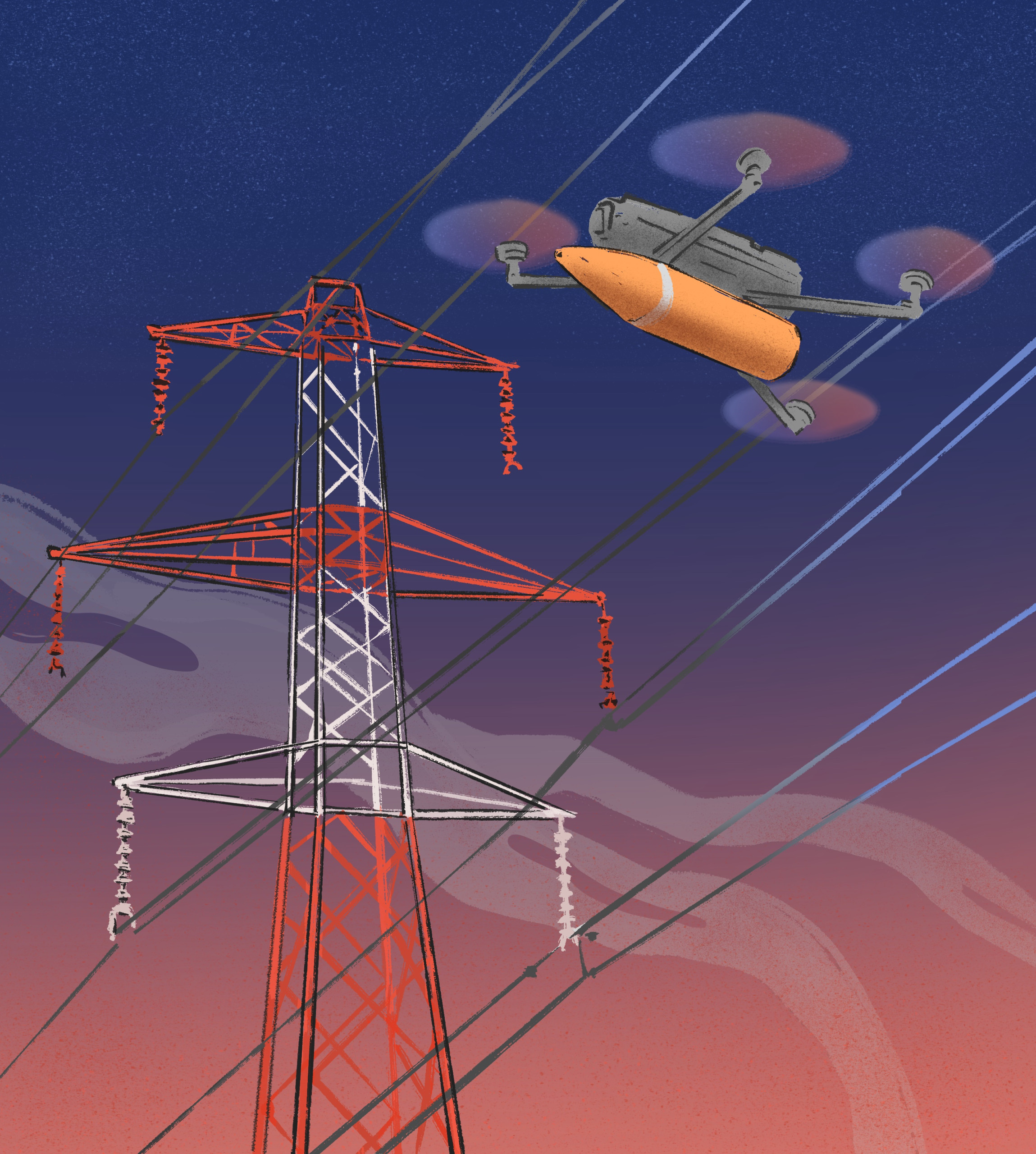
The power suddenly cuts out. Drones fly over a substation; there are indications of sabotage. Traffic lights, mobile phone networks and the internet cease to function. Supermarkets and petrol stations can no longer open. The longer the outage lasts, the more dire the effects on everyday life. A blackout becomes a full-scale emergency.

The cause is not always clear. A power cut may follow an extreme weather event or result from a technical fault – but it can also be caused by a deliberate attack on infrastructure. For emergency services, the immediate task is the same: respond, regardless of what caused the outage.

The final question in CORRECTIV’s questionnaire was open-ended: where do counties and independent cities see the greatest need for improvement? Alongside communication and financial resources, one of the most frequently cited priorities was preparing for complex, large-scale emergencies such as acts of sabotage and widespread power cuts. According to the counties, prolonged power and communications outages in particular require more resilient infrastructure and contingency measures, including backup generators.

How quickly a power cut can escalate into a major emergency was demonstrated in Berlin in January 2026. Following an arson attack, around 45,000 households in the south-west of the city were left without electricity and heating for several days. Critical facilities had to be supplied with emergency power, emergency call centres set up and fuel provided.

In addition to the operator of Berlin’s electricity distribution network, the response involved the fire service, police, the THW, the German Red Cross, the armed forces, district administrations and other infrastructure operators. It took around 100 hours to fully restore the electricity supply. The incident demonstrates how closely the different elements of emergency preparedness are connected.

Germany and Europe in the crosshairs

Recent months have shown the extent to which these threats have become part of our reality. Drone incidents, suspected acts of sabotage targeting energy infrastructure and incursions into European airspace and maritime areas have exposed the vulnerability of critical infrastructure.

Cyberattacks pose an additional threat. They can expose sensitive data, disrupt the digital systems of companies and public authorities and, in the worst case, bring essential operations to a grinding halt. The damage to the German economy caused by data theft, industrial espionage and sabotage is estimated at more than €211 billion in 2026. The figure is taken from a representative survey conducted by Bitkom Research on behalf of Germany’s digital association, Bitkom.

Russia’s war against Ukraine has changed Europe’s security environment and intensified hybrid threats such as cyberattacks, sabotage, espionage and disinformation. How authorities assess such incidents and when they become a threat of wider significance are questions of key importance.

Europe's security between peace and war

The perceived severity of the threat varies across Europe. Germany has so far treated these attacks as security threats below the threshold of war. On NATO’s eastern flank, however, the threat from Russia is more immediate. For example, Poland’s government said the country had to respond with defensive measures following the incursion of 19 Russian drones into Polish airspace in September 2025.

Europe must therefore prepare for scenarios ranging from cyberattacks and sabotage to a possible military confrontation. The precise boundary between a hybrid threat, a state of heightened tension and a state of defence is deliberately not clearly defined.

“It is not in the interests of a state under attack to define a clear threshold,” says security expert Jannik Hartmann. Doing so would show an adversary which actions could still be carried out without crossing that line.

In October, Germany’s Federal Intelligence Service classified Russia as the country’s greatest security challenge. The Baltic states of Estonia, Latvia and Lithuania are also increasingly preparing for a possible military attack. Russia has repeatedly threatened NATO with the use of nuclear weapons.

Germany: There are several legal stages between peace and an armed attack. In a situation of heightened danger, certain provisions of Germany’s defence and emergency legislation can be applied under Article 80a of German Basic Law. This requires a two-thirds majority in the Bundestag, Germany’s federal parliament.

Article 115a of German Basic Law, a state of defence is declared when Germany is under attack or an attack is imminent. Special rules for national and collective defence then apply.

European Union: The EU has no directly equivalent transition between states of peace, heightened tension and war. Instead, it has several mechanisms that can be activated depending on the situation.

In the event of disasters or terrorist attacks, the solidarity clause under Article 222 TFEU may apply. If a member state suffers armed aggression, Article 42(7) TEU obliges the other member states to provide assistance. They decide for themselves the form and extent of this assistance.. The clause is compatible with NATO commitments.

The EU Preparedness Union Strategy was developed to strengthen crisis preparedness. It links civilian and military preparations and includes protecting critical infrastructure and supply chains, securing essential goods and resources, and expanding industrial capacity.

NATO: Central to Article 5 of the North Atlantic Treaty is a position of collective defence: an armed attack against one member is considered an attack against all. Allies must assist the attacked member, although they decide for themselves the form and extent of their contribution.

Article 4 allows allies to consult one another when a member’s security is threatened.

Article 3 also requires members to maintain and develop their capacity for collective defence and resilience.

Germany is an important logistical hub for NATO (OPLAN DEU) due to its geographical position. In a crisis involving the alliance, allied troops, equipment and supplies may need to be transported along German roads and railway networks or through its sea ports and airports. The support provided by civilian structures for these movements is known as Host Nation Support, and it forms part of Germany’s national and collective defence.

Safe Places – Where Can People Find Shelter in an Emergency?

Danger threatens outside – so people seek shelter. Basements, underground car parks, public buildings, underground railway stations and designated shelters can all become important places of refuge in an emergency.

When sirens blare outside, temperatures remain extreme for days on end  or floods threaten streets and homes, the same question arises: where is a safe place?

Depending on the situation, shelters can protect people against different types of threats, including armed attacks and explosions as well as chemical, biological, radiological or nuclear hazards. Shelter can also be important during extreme weather. Cool indoor spaces offer protection during heatwaves, while suitable buildings can provide shelter from storms, floods or flying debris. The right place depends on the particular threat.

In hot weather, local authorities can take relatively simple precautions. Some have already mapped out cool, publicly accessible spaces.

A large-scale power cut or an armed attack presents different challenges. In these situations, people need places that can provide protection for extended periods.

Little information, few shelter spaces

Many counties and independent cities either did not answer our questions about shelters or classified the information as sensitive. CORRECTIV did not ask where individual shelters were located, but simply whether they existed, how they were equipped and how many could potentially be used. This is information relevant to both the authorities and the public.

Some local authorities welcomed the public compilation of information on emergency preparedness. Others regarded public disclosure and discussion as a security risk. One independent city even argued that discussing the core of emergency preparedness in the media could not be in the public interest.

At least 180 counties and independent cities said they had no officially designated shelters or did not know whether any existed.

An enquiry by CORRECTIV to Germany’s Federal Office of Civil Protection and Disaster Assistance (BBK) in September 2025 found that, of around 2,000 public shelters originally designated for civil protection, only 579 facilities – with space for approximately 478,000 people – remain formally designated for this purpose. With a population of 83.3 million, this means there is theoretically not even sufficient space for one per cent of the population.

Even this figure does not reflect actual availability, however. According to the agency, the designated facilities are neither functional nor ready for use. But at the same time, other buildings across Germany could potentially offer protection under certain conditions, including underground railway stations, car parks and basements.

Finland integrates civil protection into everyday life

A look at other European countries shows that civil protection has a different status in some places. In Finland, underground shelters are partly integrated into everyday life. Shelter facilities with space for around 4.8 million people are available for a population of approximately 5.66 million – theoretically enough for around 85 per cent of the population. People in Finland also regularly practise what to do in an emergency. Germany is not even close to this level of preparedness.

“There are certain crises for which you cannot prepare completely,” says Anja Bierwirth, head of the Urban Transformation Research Unit within the Energy, Transport and Climate Policy Division at the Wuppertal Institute.

She argues, however, that concepts such as Finland’s can cover a range of different scenarios, from climate-related disasters to bomb alerts. In Helsinki, for example, sports facilities can be converted into shelters in an emergency. “At the same time, they also offer the public a pleasant and usable space in everyday life, in peacetime.”

Shelters set to return

The federal and state governments in Germany are now working on a new national shelter strategy. Plans include a nationwide register of suitable places of refuge, a digital directory and recommendations for simple measures to make private basements more suitable for use as shelters.

Building new bunkers would be expensive and take years. Providing shelter across the entire country therefore appears unlikely in the short term.

The focus of the issue is consequently shifting: it is no longer only a question of how many shelters Germany has, but also of which existing buildings could offer protection in an emergency – and whether local authorities and the public know where these places are and how they can be used.

From dismantling civil protection to preparing for new crises

“For decades, Germany and other parts of Europe enjoyed and made use of a peace dividend,” says Jannik Hartmann, an associate fellow at the NATO Defense College whose research focuses on critical infrastructure, crisis management and defence. He is referring to savings made by reducing military spending. “That had an enormous impact on civil protection infrastructure”: shelters and warning systems were gradually dismantled or neglected.

But circumstances have changed. Germany and Europe are facing new challenges due to climate change and geopolitical upheaval, increasing the need for effective civil protection.

“Financially and legislatively, a great deal has been set in motion. But it is a fragile dynamic,” Hartmann says. Civil protection has been underfunded for decades and rebuilding the necessary structures will take time.

Emergency preparedness concerns everyone

Whatever scenario unfolds, the decisive factor goes beyond cooperation between the authorities and emergency services: the public must also be involved and aware of what to do in an emergency.

“Civilians need to do more to prepare themselves,” says Dennis Wolf from the THW. No one should assume that, during a power cut, “someone will turn up within 15 minutes to switch the lights back on or bring food”.

People who can initially help themselves in a crisis relieve pressure on emergency services and free up resources for those who urgently need assistance.

For this to work, however, the public must be informed about personal preparedness and the appropriate response in an emergency. In CORRECTIV’s questionnaire, almost all counties and independent cities said they informed residents about self-preparedness and how to behave in a crisis.

One source of guidance is the information provided by the BBK. Local authorities also report using a range of communication channels, including social media campaigns, public information events and notices. But these answers do not show how well prepared people actually are.

Staff and resources remain bottlenecks

Local authorities also have ground to make up, particularly in areas such as staffing structures, financial resources and the number of volunteers ready to respond. Volunteers are indispensable to civil protection; they complement full-time emergency services and provide additional capacity during major incidents.

Civil protection requires more than sufficient numbers of emergency personnel and emergency plans. What matters is that public authorities, emergency services, businesses and the public are prepared, understand their responsibilities and can work together when a crisis strikes.

Personal preparedness begins with simple steps one can take if everyday services are temporarily disrupted. The BBK recommends keeping sufficient drinking water and non-perishable food at home, along with essential medicines, a torch, a radio, power banks and important documents.

It is also sensible to familiarise yourself with warning apps and other alert systems as well as what to do in case of a power or communications outage. The aim is to be able to get through several days without immediately depending on outside assistance. 

Those who wish to contribute more can volunteer in civil protection initiatives in their local area, for example with volunteer fire services, the German Red Cross, the Johanniter, the Malteser, the Workers’ Samaritan Federation or the THW.

Tasks range from firefighting and first aid to providing care and supplies, technical assistance and logistics. No prior experience is required to get started; the organisations provide the necessary training. Volunteering therefore strengthens the community while simultaneously equipping people with skills that can prove invaluable in an emergency.

Credits