
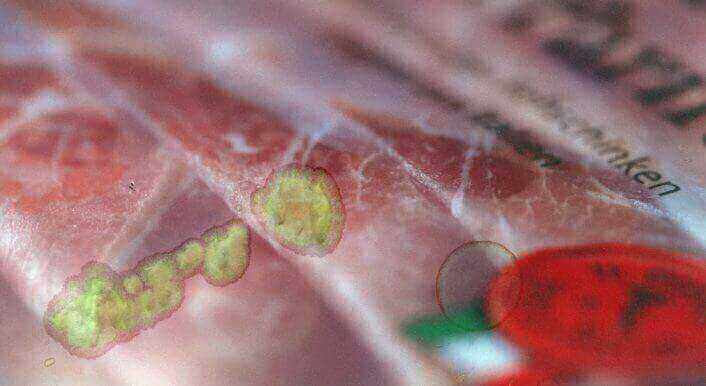
Resistant germs are on the move, especially in Italy. According to a report by the European Center for Disease Prevention and Control, which collects data from hospitals around Europe, resistance to antibiotics in Italy is among the highest in Europe. Almost every second sample taken from the common diarrhea bacterium E. coli was resistant to fluoroquinolones – an all-time record for the continent.
Consumption of antibiotics is relatively high, too. According to a study from 2013, a patient in Italy takes 50 percent more antibiotics than the average European. This is the second highest in all of Europe. The use of antibiotics in farming is comparable. For every kilogram of livestock raised, Italy uses twice as many antibiotics as the average of the EU – only Cyprus uses more.
Why is consumption in Italy so high? One reason is that the ability of the country to mount an effective response to fight resistant infections seems hampered by a fragmented National Health System. The National Health System is split between the 21 regions of Italy, making it difficult to apply a common national policy on how to fight antibiotic resistance.
Another hindrance is the lack of available data on the issue. Even scientists cannot access the data freely. There are approximately 50 hospitals that collect data on resistant infections and report the numbers to the National Institute of Health and the Ministry of Health. Theoretically, the data is available to journalists and the public, but that isn’t the case in practice. Institutions seldom provide statistics.
Italian citizens also have different standards regarding freedom of information, in contrast to the US, Great Britain or Germany. Open data activists, who systematically ask the state for information, report that only one third of the requests submitted are being answered within the 30-day period required by law. The administrative silence is widely practiced at all levels of government as it’s not sanctioned under the current laws.
In September 2015, Correctiv.org sent a request for information to the Ministry of Health. We asked how the agency registers resistant germs, how many infections there were in the last years and how many deaths are associated with these infections.
Six months later, despite of numerous calls to the press office, we still have not received an answer.


